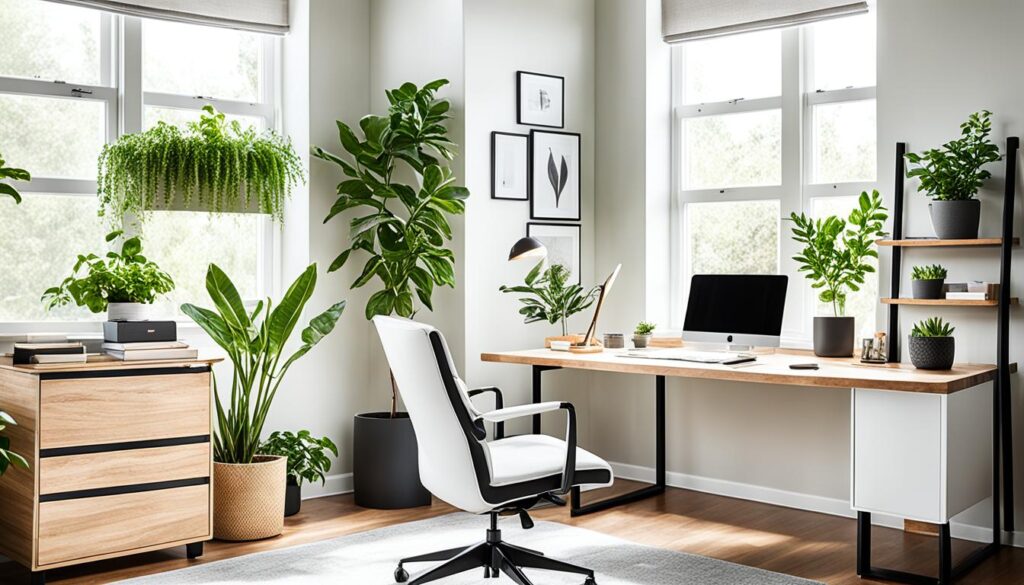
The work from home trend grew during COVID-19 out of necessity. The U.S. Census Bureau shows the number of these remote workers tripled between 2019 and 2021. This increase brought the total to 27.6 million people.
Now, many are choosing to work from home on a hybrid or full-time basis. This shift has led some to move to more affordable areas. They are leaving expensive cities behind.
For those moving or deciding on a new home, many are opting for smaller living spaces. These require less maintenance and offer more peace.
Key Takeaways
- The work from home trend has surged since the COVID-19 pandemic, with the number of remote workers tripling.
- Remote work offers the flexibility to live in more affordable areas and downsize to simpler homes.
- Designing a dedicated workspace at home is crucial for productivity and work-life balance.
- Considerations like location, lighting, acoustics, and ergonomics should be prioritized for a comfortable and efficient home office.
- Incorporating smart home technology and outdoor workspaces can enhance the work from home experience.
The Rise of Work from Home Culture

The COVID-19 pandemic has changed how we work. Many are now doing home projects like renovation. This is because lots of people are working from home. With this change comes a huge interest in DIY, home decor, and interior design services.
Since the pandemic, working from home has become the new norm. A global study found that on average, people working from home save 72 minutes each day. This is time they would have used commuting. This saving means less money spent on fuel and less wear on their cars. Plus, they’ve got more flexibility in their schedules.
Even with these benefits, some companies want their employees back in the office. But research shows that at home, people get more work done without as many distractions. A study by Hubstaff found that remote workers are more productive, spending nearly 4 hours a week more focused than office workers.
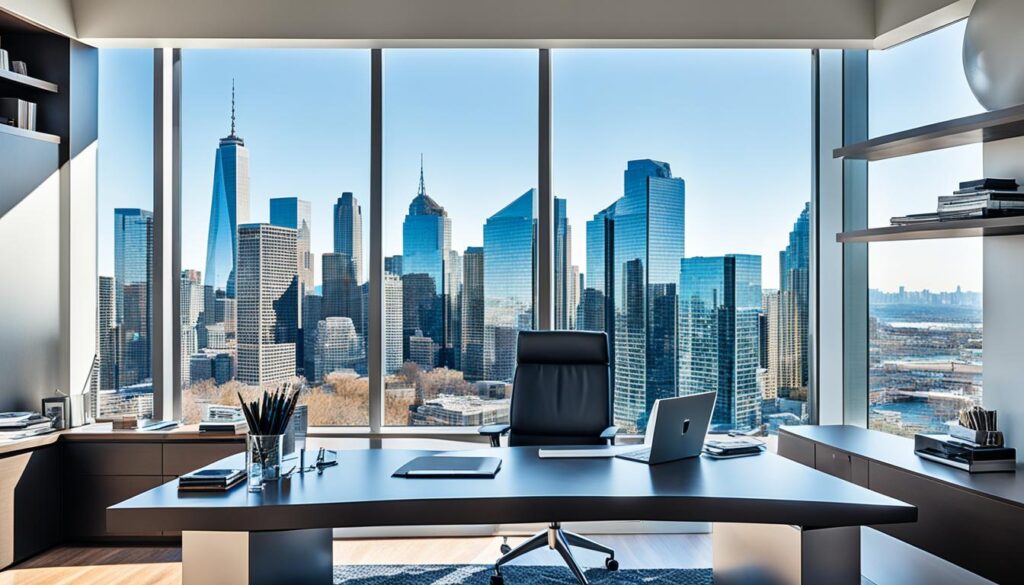
As working from home continues, there’s a bigger focus on creating great home offices. Homeowners are turning to professionals to make better workspaces. They’re looking to improve their homes by making them more efficient and adding smart home tech. This shift shows how the home improvement industry is changing to support remote work needs.
Advantages of Working from Home
The trend of working from home is growing. A separate home office is now very important to many. The 2024 Houzz and Home Study found that in 2023, people spent time and money on their home offices. They planned for about 6.6 months and worked on it for another 3 months.
On average, they spent $2,000 to make their space a good home office.
Flexibility and Cost Savings
Working from home offers a different kind of freedom. But, expert Emma Beryl warns, it’s crucial to set up a good work space to keep your focus. By improving your home office with DIY projects or help from handyman services, you can benefit from working at home. Doing this can cut costs and make your work area better. For example, improving energy efficiency and adding smart home technology.
Customizing your home office is a major plus. You can make a space that fits your work style. Whether you do the work yourself or get help from pros, making your office work for you can save a lot of money.
Creating a Dedicated Workspace
When focusing on home improvement, renovation, or remodeling, a dedicated workspace at home is key if you are working from home. Experts point out that the right work setup can really boost how you feel and how much you get done.
Dr. Allen Conrad, who works as a chiropractor in North Wales, Pennsylvania, stresses the need for a good home office setup. He says that setting up your workspace right can stop back problems, like those at L5, from too much bad sitting. It can also prevent bad spine conditions that might cause issues like sciatica.
If you’re into doing DIY projects or if you prefer getting professional help, there’s a lot you can do to make your work area just right. Putting effort into home décor and design can make your workspace work better for you. For example, it can make it more efficient, cozier, as well as tech-friendly.
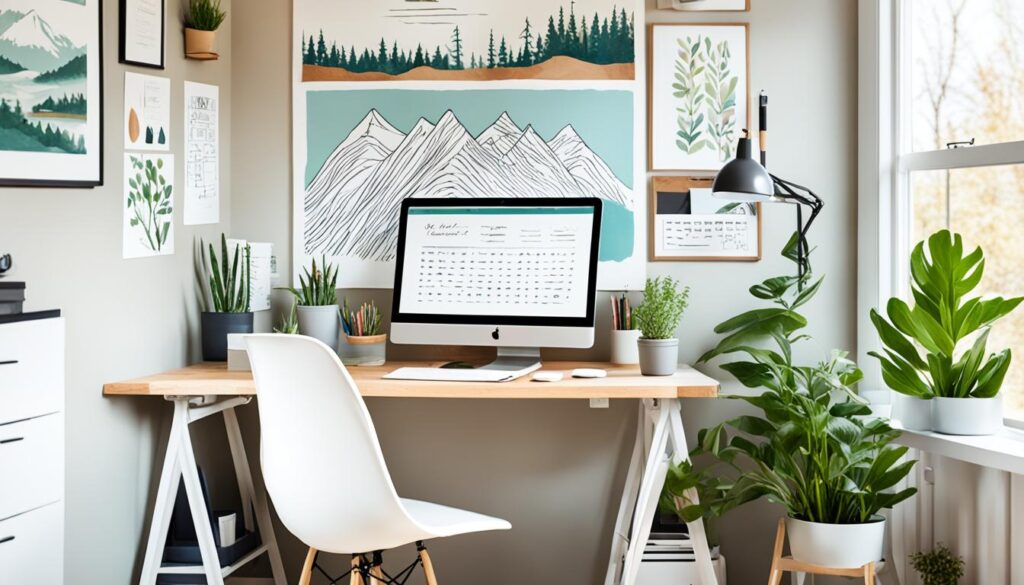
Getting the correct furniture, lighting, and sound-proofing can change your home office big time. It makes it a place where you can really get work done but also feel at peace. These steps greatly improve your health and how you balance work and life, especially when you’re working from home.
Location and Design Considerations
The work from home (WFH) trend is picking up steam. It is critical to carefully choose the spot and design your home office. Many homeowners are focusing on home improvement, remodeling, and creating a quiet, dedicated workspace to avoid distractions.
Location and Sound Insulation
Experts suggest placing your home office in a quiet place, away from noise. Jay Kallos, a top architect at Ashton Woods in Atlanta, Georgia, advises adding sound proofing in new constructions. He warns, though, that barn doors aren’t the best choice if you need a truly soundproof office.
Ariana Lovato, from Honeycomb Home Design in Arroyo Grande, California, stresses the need to limit distractions. She recommends using a spare bedroom for work. This allows for quiet and private space for calls or meetings. Yet, many people working from home are doing so in shared living spaces because of space constraints.
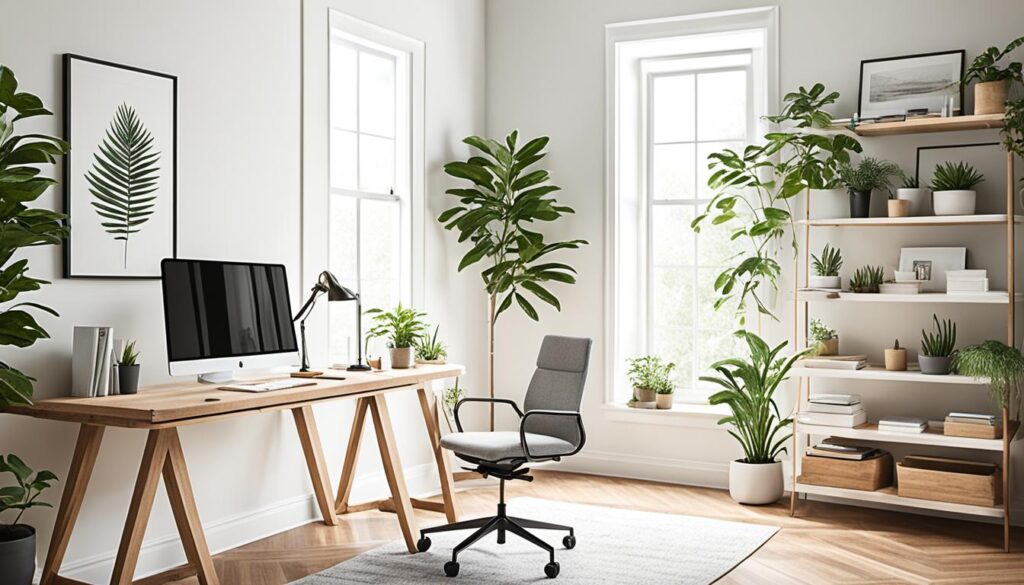
Thinking about sound and location is key for a great home office. It’s crucial for a place with fewer distractions to improve productivity. Getting help from contractors and interior designers can boost your WFH setup.
Home Improvement: Functionality and Storage
Designing a workspace at home means thinking about how it will work and where things will go. With the right projects, you can make your home more productive and organized. This way, you can balance your work with life at home.
Leigh Spicher, from Ashton Woods in Orlando, knows about this. She says good design will make sure your work area doesn’t mix with family time. It’s best to have a home office in its own space, away from bedrooms or dining areas. This space should have a door, so you can close it when your work day is done.
Christopher Grubb, a designer in Beverly Hills, does things differently. He likes to make workspaces look and feel different from the rest of the house. This change can make you feel like you are going to a different place to work. You can achieve this with smart design and DIY projects.
If you want to improve a room you already use or change space you don’t use much, there are many options. You can add built-in storage, shelves, or even change the furniture to work better. There are many smart technologies also available.
Thinking about how you work and what you need will help create a great work area at home. It will not only make you more productive but also keep your work separate from your personal life. Choosing the right help can make your home a better place to live and work, happier and more balanced.
Lighting and Acoustics
Creating the perfect home office for your work-from-home (WFH) situation is key. It needs careful attention to both lighting and sound. Interior designer Samantha Grubb shares that most offices rarely meet the mark for clear audio and video.
Proper Lighting and Sound Absorption
For a better space, Grubb advises adding certain home improvement elements. She suggests using an area rug to cover hard floors, reducing sound echo. Also, acoustical panels made of a dense, felt-like material can absorb more sound.
Grubb says that adding soft elements to your office, like sofas and curtains, helps absorb sound too. Good lighting matters a lot to avoid eye strain. “Light rings are great, and adjust your lighting’s brightness with a dimmer,” she suggests. This prevents a harsh light directly above you in video calls.
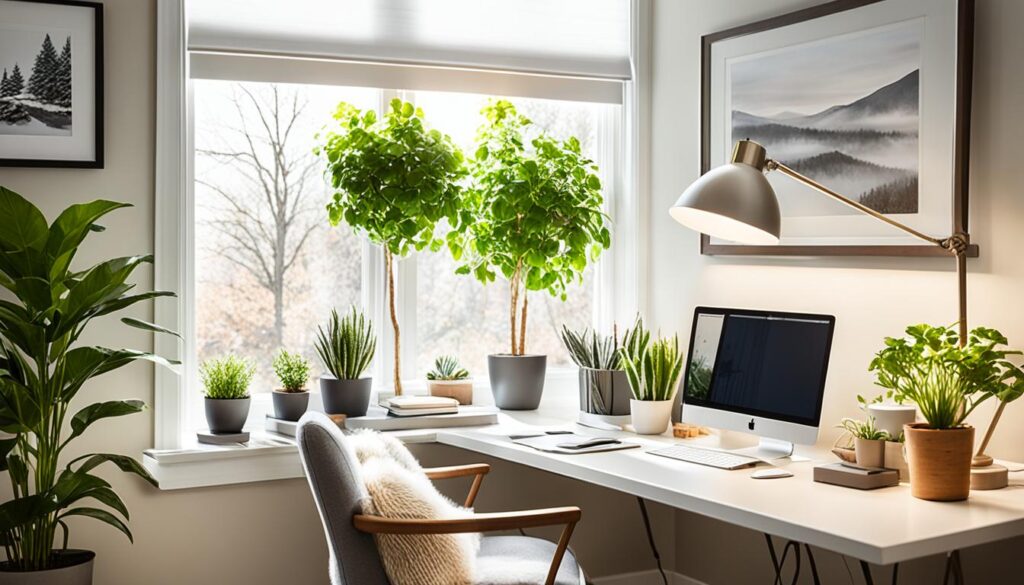
By following these home improvement and interior design suggestions, you’ll make your work-from-home area better. It will not only look great but it will also enhance your audio and lighting for smooth virtual meetings.
Ergonomic and Wellness Considerations
When planning a home improvement or home renovation project, think about ergonomics and wellness. Dr. Allen Conrad from Pennsylvania says this is key. Good home ergonomics can stop back problems and sciatica from bad chairs and desks. He notes, “The right home workspace setup can prevent spine issues.”
According to designer Christopher Grubb, your space needs to be both stylish and practical. He mentions Europeans have done it for years, and now America is catching on. Include smart designs in home remodeling and DIY projects. This supports your health and work.
Adding smart home improvement items and saving energy can make you feel better. Think about things like lights you can adjust, reducing noise, and smart home technology. These help make a calm space that aids in focus and unwinding. Make your home office stylish and efficient with good habits and health in mind. Doing so helps you succeed in today’s work from home setup.
Outdoor Workspaces and Smart Home Technology
Since the pandemic, many experts realized working outdoors can be great. They set up special areas outside for work. Jane Grubb, a well-known expert in home improvements, explains how. She talks about adding power and data outlets under tables to use as desks outside. She also mentions adding special outlets with USB ports in outdoor areas. These are handy for anyone hoping to charge their devices while enjoying the fresh air. Grubb’s team even puts up outdoor umbrellas. These umbrellas are not your ordinary kind. They come with lights and heaters. They’re meant to keep workers comfortable while working outside.
Voice assistants, like Alexa or Google Home, are also a big help for those working from home. These technologies let people ask questions, set reminders, and more without stopping their work. Grubb highlights the benefits of smart home features. She says they’ve really improved her clients’ ability to focus without losing out on home comforts.
The pandemic changed how we think about work and relaxation. It’s led to more interest in making homes better suited for both. As a result, interest in home improvement, renovation, and remodeling has grown. People are looking for ways to make their homes more useful and friendly. This includes energy-saving efforts and design improvements. In Singapore, those looking to upgrade their homes are relying on professionals. This expert help, combined with smart home technology, is making working from home much nicer.
Source Links
- https://www.forbes.com/sites/terriwilliams/2024/04/23/if-you-work-from-home-heres-6-tips-to-create-the-perfect-wfh-office/
- https://decormatters.com/blog/creating-a-wfh-space-that-is-both-comfy-and-constructive
- https://www.hometrust.sg/articles/how-to-design-a-functional-and-stylish-home-office/
