
More than ever, it’s important to have a safe, peaceful space at home. This is where you can let go of daily stresses. Many are choosing to make their homes reflect a Zen style, focusing on simplicity and balance. With no strict rules, a Zen space is all about creating a bubble of peace in your home.
Key Takeaways
- Incorporate simplicity and visual continuity in your home design
- Achieve balance and harmony through thoughtful color choices
- Create a sense of softness and bring in natural light
- Use appropriate lighting to set a zen ambiance
- Opt for minimalist furniture and decor with natural materials
The Essence of a Zen Space
Creating a Zen-inspired space is simple, balanced, and carries on visually. The aim is to create harmony where every part is equal. This means arranging design elements with a coherent flow.
Simplicity and Visual Continuity
A Zen space is centered on simplicity. It uses clean lines to create visual continuity. This makes the area calming and peaceful. Each design piece plays a part equally, leading to a tranquil and whole environment.
Achieving Balance and Harmony

Getting the balance right in a Zen space is key. Everything must blend, from furniture positions to texture mixes and colors. This balance makes the place feel solid and perfect for calm and relaxation.
Focus on simplicity, keep visual continuity, and aim for balance and harmony. By doing so, your home can become a serene haven. It perfectly reflects the Zen interior ideal.
Choosing the Right Color Palette
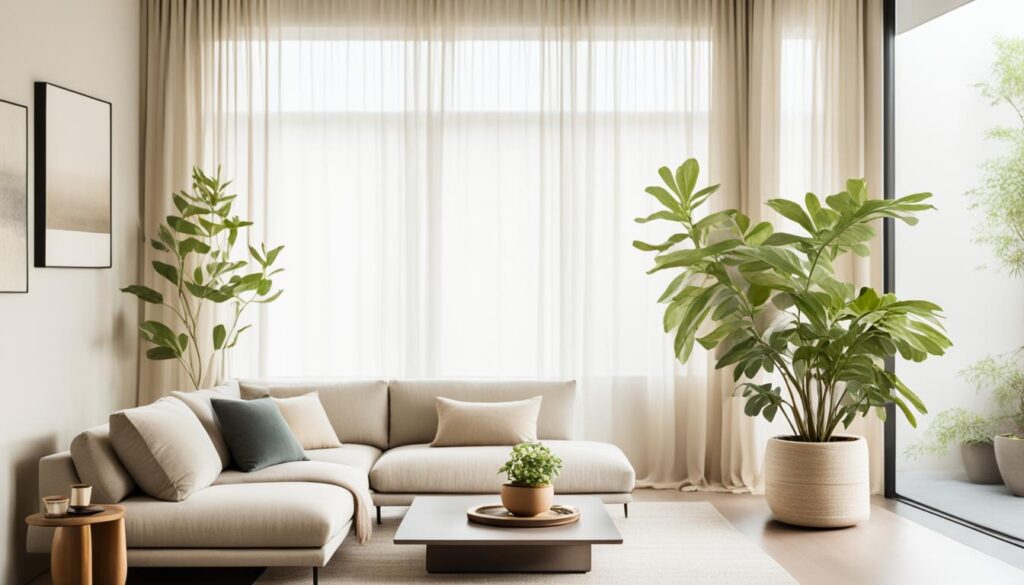
In a zen space, picking the right colors is key for peace and calm. A zen room often uses earthy tones to create a natural, serene atmosphere.
Earthy Tones for Serenity
A zen color palette includes white, grey, beige, and soft pastels. These earthy tones immediately relax you. They offer a break from daily stress. Using these colors makes your space feel like a spa. It fosters calm and peace of mind.
Chromatic Harmony and Flow
It’s crucial to make sure your color palette works well together. By picking colors that match, you create a peaceful flow. This flow leads the eye, making everything feel united. A well-thought-out color scheme removes any visual chaos. This makes the area feel more stable and focused.
Choosing the right color palette with earthy tones and chromatic harmony turns any area into a zen paradise. It encourages a deep sense of flow and peace.
Home Improvement: Creating Visual Continuity
Making your home look and feel harmonious is key to a serene zen space. It’s all about placing things in the right spots to improve balance. This includes your furniture and decorations. When you arrange them with care, you enhance your home’s calm feel and balance.
Aligning Elements and Directional Flow
To establish Visual Continuity, align things in a parallel way. This means making sure items like shelves and plants are in line with each other. Such an approach ties the room together. It makes your space look and feel more unified. Also, placing these items at right angles helps add interest without disrupting harmony.
Think about how your eyes move around the room naturally. When you place your items with this in mind, you guide what people see. This way, your home improvement project becomes a journey through peace and beauty. It helps make your space not only look good but also feel calming.
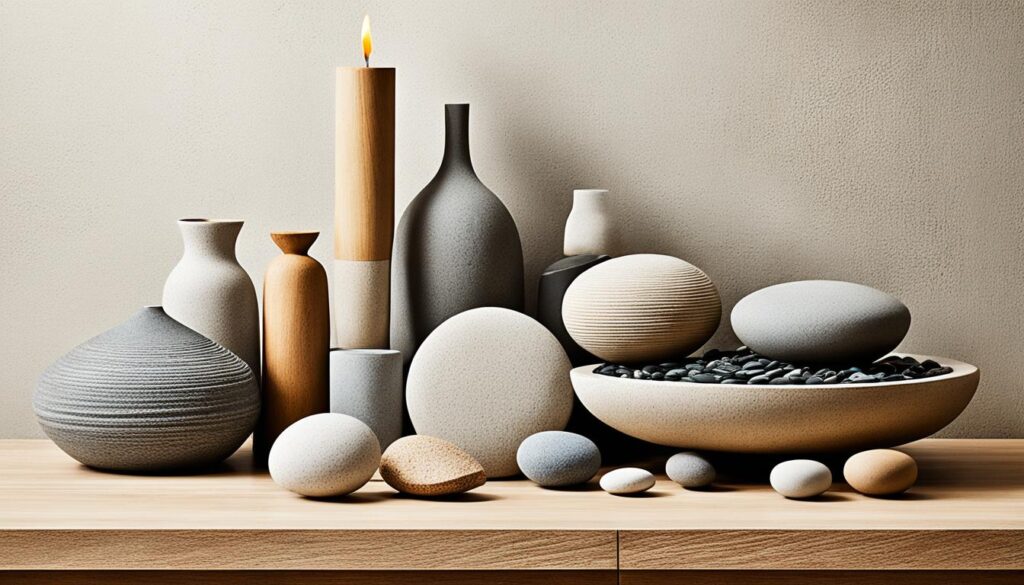
To make your zen space successful, focus on alignment and flow. Think deeply about how each part of your home comes together. This leads to a space that looks and feels like a single, beautiful whole. Such harmony promotes relaxation and peace in your home.
Embracing Softness and Natural Light
Designing a zen interior is more than picking colors and furniture. It’s about adding soft touches and plenty of sunlight. These things deeply affect how the space feels.
Textures that are soft and softness itself are key in zen-design. Introduce softness with rugs, throws, and fabrics. Minimalism keeps the room focused on the beauty of these materials. This approach creates calm and comfort.
Plenty of natural light is also crucial. Sunlight boosts peace and space in the room. Place windows and use light curtains wisely to enhance the natural light. This marriage of softness and natural light nourishes a zen experience at home.
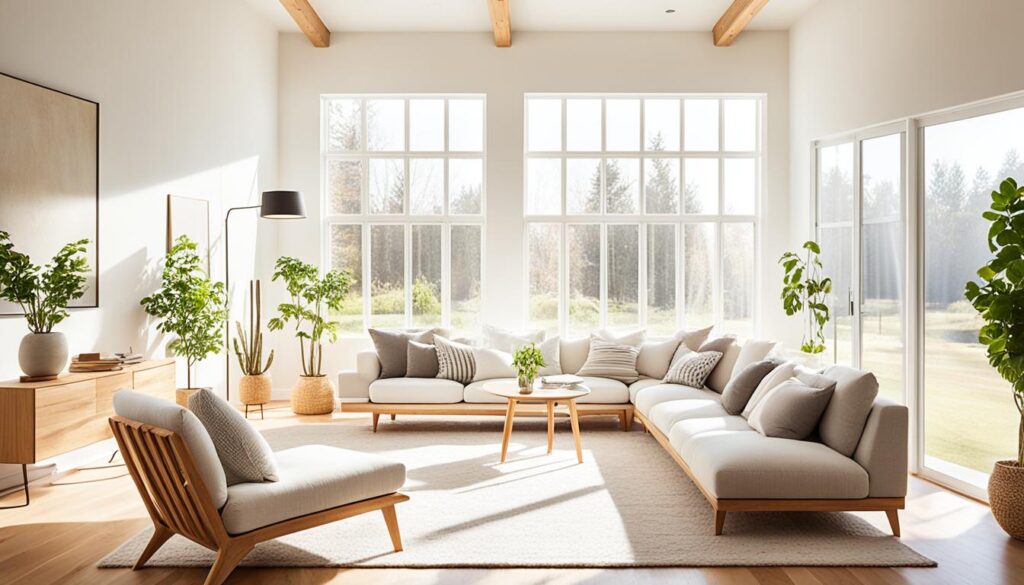
When homeowners add softness and natural light with care, they make their space tranquil. It’s a balance of real comfort and a spiritual feel, representing true zen.
Lighting for a Zen Ambiance
The right Lighting is key when you want a zen-like space at home. It’s not just about natural light. Mixing in soft Lighting from various sources can make your home feel truly peaceful.
Soft Lighting from Multiple Sources
Choose Soft Lighting like lamps, candles, and fairy Lights. They create a gentle, indirect glow. This type of Lighting helps promote relaxation. It avoids the harshness of direct lights.
Layering various Lighting types adds depth and guides the eye. It makes your home feel more Zen.
Warm Tones and Candles
Pick Lighting that gives off Warm Tones, like yellows and oranges. Avoid cool blues and greens. These Warm Tones make a space cozy.
Adding candles with their soft flicker can boost the calm. It brings in a natural, serene touch.

Furniture and Decor for Zen Spaces
To make a zen-like room, choose your furniture and decor carefully. Look for items that are simple, with clean lines, and made of natural stuff. This way, you’ll make a calm and beautiful space where you’re not bothered by too much.
Simple Lines and Natural Materials
For a zen area, pick furniture that’s clean and simple. Go for things made from wood, wicker, or bamboo. Avoid fancy or busy stuff. It could ruin the peaceful feel.
Imagine having a simple wooden coffee table with a plain sofa beside it. Add in natural rugs, baskets, and simple lights. You’d create a spot that’s really relaxing.
Minimalism and Negative Space
Less is more in a zen home. Having fewer pieces of furniture helps your place feel bigger and quieter. Letting some spaces stay empty balances the room and makes what’s there stand out.
In your living room, just a few chairs, a clean media console, and a big empty wall work wonders. For your bedroom, a simple bed, plain nightstands, and bare walls give you a peaceful escape from a busy day.
Incorporating Nature and Natural Scents
To make a space really zen, nature is key. Bring in plants and greenery to connect indoors with outdoors. This creates a calmer, more serene feeling.
Plants and Indoor Gardens
Place bright, fresh plants in your zen area for a calming vibe. Use everything from succulents and ferns to vines and palms. This will balance the room’s clean look with nature’s beauty.
Create a small garden inside for a peaceful spot. The sound of leaves rustling and the sight of plants can relax you.
Aromatherapy and Natural Fragrances
Use scents to add to the zen atmosphere. Essential oils or natural incense can make you feel calm and relaxed. Try scents like lavender to turn your space into a spa-like haven.
Candles and flowers can add relaxing scents too. Mixing nature, plants, and scents can turn your home into a sanctuary. Here, you can find peace and calm.
Eliminating Electronic Distractions
To keep a zen space calm and focused, it’s key to limit gadgets and potential distractions. You might need to hide or take away things like TVs, computers, and smart tools. This way, you make room for peace and deep thought.
Getting rid of electronics and distractions helps create a mindful place. This approach uses minimalism to cut down on too much sensory input. It makes the atmosphere calming, helping you relax deeply and connect with your space.
A zen space is simple, balanced, and full of peace. By choosing carefully what’s in it and saying no to gadgets, you build a haven. It supports your quest for quiet and focus in life, promoting well-being.
