
In Singapore, the commercial property scene is changing fast, thanks to property technology (PropTech). This city-state is leading the way in using new PropTech solutions in real estate. These changes are making old ways of buying, managing, and developing property outdated.
Now, Singapore is seen as a top player in making the real estate industry digital. This is a big deal for the city’s property market.
Key Takeaways
- Singapore’s commercial property sector is experiencing a significant shift due to the rise of PropTech solutions.
- Innovative technologies, such as artificial intelligence, data analytics, and virtual tours, are being integrated to enhance the consumer experience.
- Startups like Mogul.sg are leveraging advanced technology to simplify the home buying and selling process in Singapore.
- Transparency and personalization are key priorities in the evolving PropTech landscape, empowering consumers with accessible and tailored information.
- The proptech sector in Singapore is gaining traction, emphasizing the need for startups to remain adaptable to changing market conditions and consumer demands.
Introduction to PropTech and Commercial Property
PropTech, or property technology, is changing the game in Singapore’s commercial property world. It brings new ideas like digital platforms for easy property deals and smart building systems. These changes make office buildings, retail spaces, and industrial properties more efficient, open, and green. They meet the needs of today’s tech-loving market and help Singapore become a Smart Nation.

The U.S. proptech market was worth $18.2 billion in 2022 and is expected to hit $86.5 billion by 2032. Executives plan to boost their tech spending by 11%. In Singapore, proptech is growing fast, with over 100 mergers and acquisitions from 2013 to 2019. Deals in the sector have topped $7 billion from 2013 to 2020.
PropTech 1.0 started in the mid-1980s, bringing tech to real estate. It let brokers get data quickly. Now, we have PropTech 2.0, where old advisors face new tech rivals. The latest wave uses AI, Machine Learning, Blockchain, and IoT to make properties smart and self-managing.
PropTech is changing how commercial properties in Singapore are handled, rented, and sold. As the field grows, Singapore’s commercial property future will be shaped by advanced tech. This will lead to better efficiency, openness, and green practices in office buildings, retail spaces, and industrial properties.
Key Trends in Singapore’s Commercial Property Sector
Singapore’s commercial property scene is changing fast. New trends are making a big impact. Hybrid workspaces are changing office needs, thanks to PropTech.
Sustainability is now a big deal. The government and businesses want eco-friendly buildings. They’re also focusing on saving energy.
The commercial real estate sector is all about Market Trends and Property Valuation. The industrial and logistics areas are growing fast. They’re using new tech to fight inflation.
Fields like e-commerce, cold storage, and data centers are set to grow a lot. This will change the market a lot in the next few years.
Sustainability is a big focus. Green buildings, saving energy, and reducing waste are becoming more common. These efforts are changing how investors look at properties.
Investors are now looking at industrial and logistics REITs. They see a lot of potential in these areas.
Collaboration is another big trend. Companies are teaming up to find the best development chances. They’re also working together to make their properties more valuable.
This teamwork, along with new PropTech, is making older industrial estates better. It’s helping shape the future of Singapore’s commercial property scene.
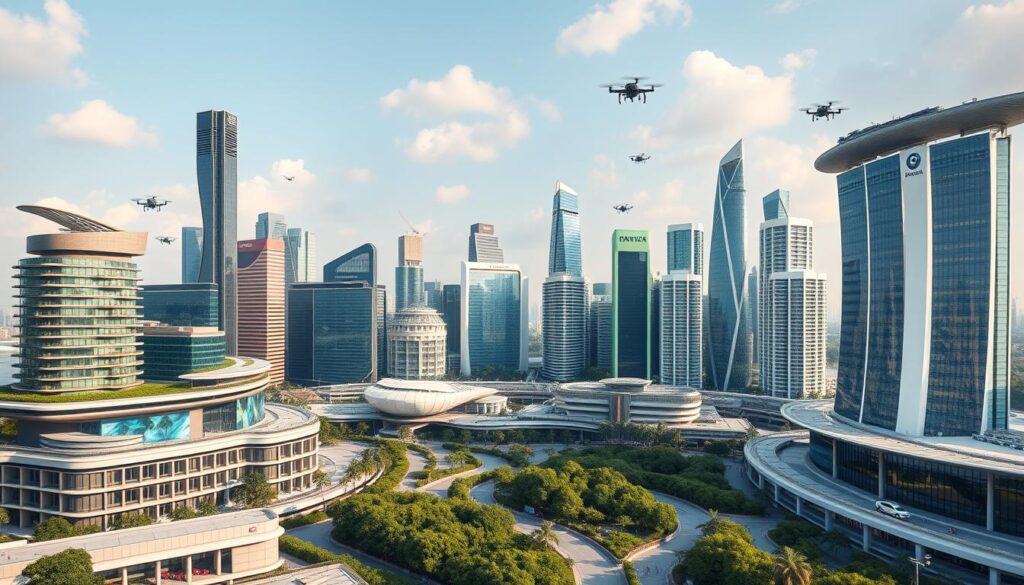
How PropTech is Changing Property Management
The commercial property sector in Singapore is changing fast thanks to PropTech. New software is making property management easier and better for tenants. It allows for smooth communication and quick updates.
JPMorgan’s 2023 Business Leaders Outlook: Commercial Real Estate shows optimism in Singapore’s commercial real estate. But, there are worries about inflation, interest rates, and a possible recession. To tackle these, property management is turning to technology to be more efficient and cost-effective.
Smart building tech, powered by IoT, is making buildings better for everyone. It helps save energy and makes buildings more eco-friendly. Property managers get real-time data to make better choices.
PropTech is also changing how we do property deals and leasing. Digital platforms make everything faster and more transparent. As the real estate world keeps growing, PropTech will help everyone stay ahead and offer great experiences.
Innovations in Leasing and Transactions
The world of commercial real estate is changing fast, thanks to PropTech. In Singapore, new digital platforms and online marketplaces are changing how we lease and buy properties. These tools offer detailed listings, virtual tours, and insights, making it easier for investors and tenants to find what they need.
Blockchain technology is also playing a big role. It uses smart contracts to make transactions smoother, cut down on paperwork, and boost security. These changes are making it easier to invest in commercial properties, leading to a more open and efficient market.
As technology advances, Singapore’s commercial property scene is getting more lively and adaptable. PropTech is making leasing and buying more efficient, data-driven, and personalized. This is driving growth and innovation in the Commercial Mortgages and Real Estate Investment fields.
Data Analytics and Market Insights
In Singapore’s commercial property sector, data analytics is key. It helps stakeholders understand market trends, occupancy rates, and property values. Tools for predictive analytics help investors and managers make smart choices. They can assess risks, set prices, and find great investment spots.
Recent studies show 81% of real estate firms want to invest in data and tech. But, only 13% have the latest business intelligence and analytics. This shows a big need for growth in this area.
PropTech companies are at the forefront, offering powerful data analytics tools. Companies like Dealpath, Real Capital Analytics, and Compstak give real estate pros deep insights. They help streamline decisions and find profitable deals. These tools use third-party data and automate reports, changing how the industry views Market Trends and Property Valuation.
The role of data analytics and market insights will grow in the commercial property sector. By using these new technologies, the industry can stay ahead. It can also improve operations and seize new chances in the Singapore market.
The Role of Virtual and Augmented Reality
Virtual and Augmented Reality (VR/AR) are changing how people see commercial properties in Singapore. These new tools are making a big difference in how we look at and deal with Commercial Property and Real Estate Investment.
VR lets people take virtual tours of properties. This saves time and money. They can see every part of a space and imagine how it could look with different furniture or changes. This is great for showing off properties that are still being built or fixed up.
Augmented Reality (AR) is also important in the Singapore market. It adds digital info to the real world. This helps people see how a space could be used or changed. It’s a key tool for those in Real Estate Investment, showing what a property could be.
Top real estate firms in Singapore are leading this tech change. For example, Cushman & Wakefield used VR to promote Park Tower in California. This led to more people wanting to rent the space. Colliers International also used VR to make leasing easier and faster for clients.
As VR and AR become more common in Singapore’s commercial property world, those who start early will have an edge. These technologies make viewing properties easier and give useful data for making smart choices. Soon, AI and big data will likely change how we market and sell Commercial Property and Real Estate Investment even more.

Smart Buildings and IoT Integration
The Internet of Things (IoT) and smart technologies are changing commercial buildings in Singapore. Smart Office Buildings and Industrial Properties are now more efficient, secure, and well-used. IoT sensors give real-time data on who’s there, how much energy is used, and how well equipment works. This helps managers make better choices and improve how things run.
Capital Tower in Singapore is a great example of a smart building. It has an Intelligent Building Management System (IBMS) that manages different systems. This system uses IoT to watch over energy, security, and how well the building works. It connects sensors to systems like heating and lights, saving a lot of money by using less energy when no one is around.
IoT also makes buildings safer. It links access controls, cameras, and locks into one system. This makes it easier to keep properties safe and cuts down on costs. Smart water management is another benefit, helping save money by finding leaks and adjusting watering times.
The data from IoT sensors helps track how green a building is. It also helps meet environmental rules and might even get tax breaks. These changes make commercial spaces better for thnkede planet, more efficient, and easier to use. This puts Singapore’s Office Buildings and Industrial Properties in a strong position for the future.
Regulatory Framework Supporting PropTech
The Singapore government is key in helping real estate grow through smart policies. The Smart Nation initiative pushes for tech use in many areas, including property. The Urban Redevelopment Authority (URA) helps set rules for PropTech and boosts new ideas in city planning.
These rules make it easier for PropTech startups to thrive. By 2022, 22 billion devices will connect to the internet. This will boost the Internet of Things (IOT) and other tech in real estate.
The Saïd Business School’s PropTech 2020 Report talks about key tech areas in PropTech. These include Smart Buildings, Real Estate Fintech, and more. Tech like IOT, AI, and Blockchain is driving innovation in PropTech.
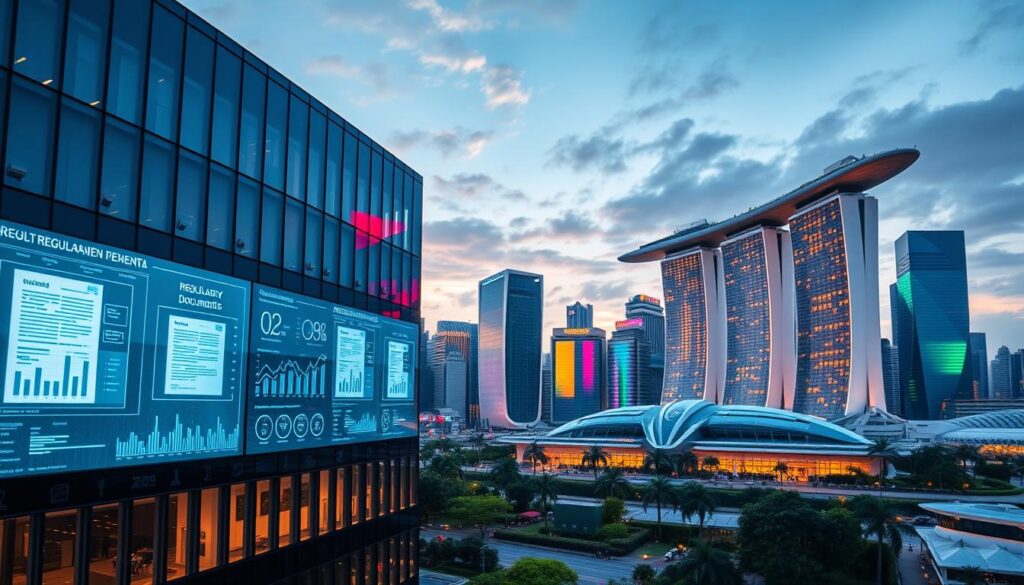
AI is changing real estate by automating tasks and giving insights. Blockchain lets people own parts of real estate assets easily. This makes trading on blockchain exchanges simpler.
But PropTech also faces legal hurdles like data protection and intellectual property. In Singapore, the rules help PropTech grow. They make sure the market follows rules and keeps expanding.
Challenges Facing PropTech Adoption
Property Technology (PropTech) is making big strides in Singapore’s commercial property world. Yet, there are big hurdles to overcome. Cybersecurity is a top worry, especially with the rise of digital deals. Keeping data safe is also key, balancing useful insights with protecting sensitive info.
Another big challenge is merging new tech with old systems. Half of property firms lack a digital plan, and 48% see tech integration as a major block. Cultural and acceptance issues add to the problem, making change hard.
Costs are also a concern, but they’re getting better as tech gets cheaper. Still, showing a clear return on investment is crucial for many.
To tackle these issues, the industry needs to focus on security, clear data rules, and training. A culture of innovation and teamwork can help unlock PropTech’s full power. This way, Singapore’s commercial property can truly transform.
The Future of Commercial Property in Singapore
The future of commercial property in Singapore is linked to new tech and changing needs. As trends shift, owners and investors must use PropTech to stay ahead. This is key to making the most of Singapore’s fast-changing commercial real estate.
Flexible workspaces will grow as companies want adaptable and team-focused offices. Sustainability will also get more attention, with smart tech and data to cut energy use and carbon emissions. AI and machine learning will help in managing properties and making smart investment choices.
Being adaptable is essential for success. Owners and investors need to keep up with market trends and invest in new real estate investment ideas. This way, they can meet tenant needs, outdo rivals, and seize new chances in Singapore’s booming commercial real estate.
