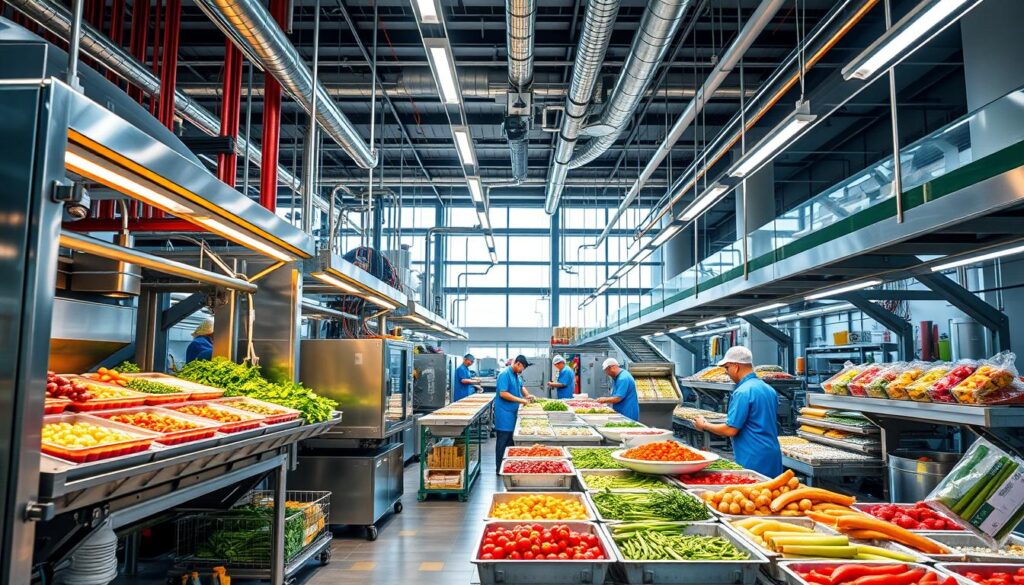
Investing in a Singapore food factory can be very profitable. The Singapore property market is booming. The government is pushing for more productivity and innovation in food.
This makes real estate Singapore a great choice for investors. The demand for food factories is increasing. This is because of the government’s “30 by 30” target to produce 30% of nutritional needs by 2030.
This growth means more demand for food factories. They are a good option for investors wanting to buy property in Singapore. There are few freehold food factory units available, making them a rare find.

The Singapore property market has many options. You can buy existing properties or develop new ones. As a real estate Singapore investor, you benefit from a stable economy and high demand.
With the right investment, you can earn reliable returns. Whether you’re looking to buy property in Singapore or invest in a food factory, knowing the market is key.
Overview of the Singapore Property Market
The Singapore property market is booming, with many investment options. Colliers International reports a rise in demand for food factories. This is expected to keep rents and prices stable for the next few years.
This trend is drawing companies to set up or grow in Singapore. It makes the country a prime spot for property investment.
Recent data shows a 0.7% rise in new sales, from 6,244 in 2023 to 6,290 in 2024. Resale transactions jumped by 14.9%, from 10,233 to 11,758 in 2024. These numbers highlight a strong demand for properties in Singapore.
Investing in a food factory can be a stable income source. The government’s support for the food industry makes it an attractive option.
The market offers a chance to profit from the demand for food factories and other properties. Keeping up with market trends and statistics is key to making smart investments. Whether you’re looking to buy or invest, understanding the current market is vital.
Understanding Food Factories as an Asset
Investing in a food factory can be very profitable. The government supports the food industry, making it a great opportunity. The food manufacturing sector in Singapore is growing fast, creating many job opportunities.
SkillsFuture says investing in a food factory can give you a steady income. It also lets you help the sector grow. Keeping up with Singapore property news and prices is key to making smart choices.
A property agent in Singapore can guide you through the market. They help with buying or selling interests in Property-Holding Entities (PHEs). Knowing the rules about Additional Conveyance Duties (ACD) is important to avoid fines.
Food factories are essential for the food manufacturing sector. They produce a variety of products for both local and international markets. The Singapore government’s plans, like the Singapore Aquaculture Plan, show the sector’s growth. Investing in a food factory can help the sector grow and provide a stable income.
Accessibility and Location Advantage
Singapore’s location is perfect for buying property. It’s close to big markets and transport hubs. This boosts the value of properties for sale here. Colliers International says a food factory’s success depends on its location, near supply chains and logistics.
The property market in Singapore is booming. There’s a lot of demand for properties, like food factories. District 9, with Orchard, River Valley, and Cairnhill, is known for luxury and easy access to amenities. New condos in District 9 start at around $7,000,000, like Klimt Cairnhill, which is 2,024 sqft.
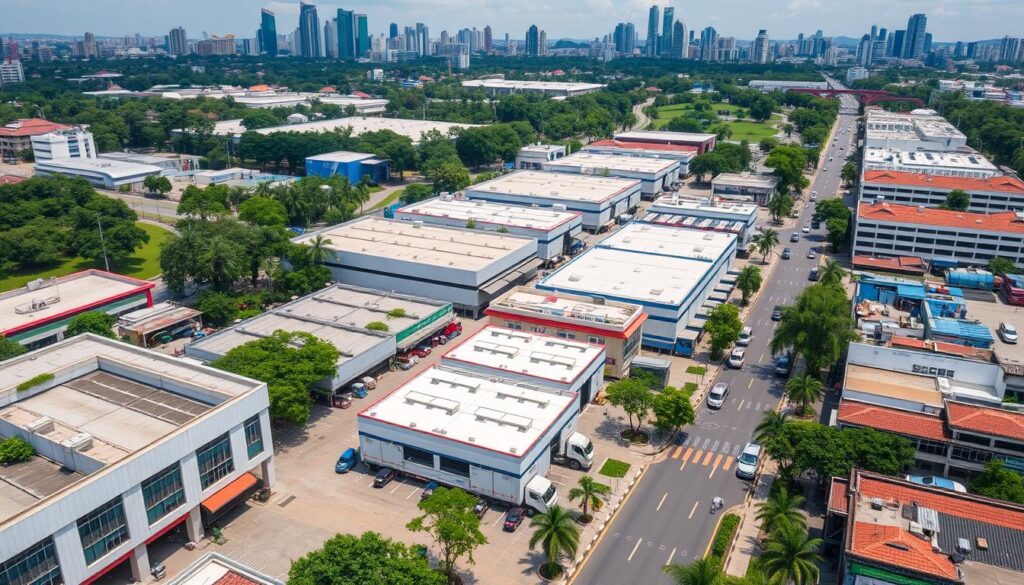
Investors can find great opportunities in Singapore. The country is making places more accessible for an ageing population and diverse needs. The market offers many chances, including food factories, which can benefit from growing demand and offer steady returns. With the right spot, investors can make their property more valuable and attract buyers.
Economic Factors Influencing Investments
Singapore’s economy is growing fast, thanks to investments and new jobs. This growth boosts consumer confidence and property demand. It makes Singapore a great place for property investment.
The government supports the food industry, drawing international companies to Singapore. This has made the property market in Singapore very active. There are many investment opportunities available.
A property agent in Singapore can guide you through the market. They help investors make smart choices. Keeping up with the latest property news is key to success.
Singapore’s economy is strong, and land is scarce, driving up property demand. The government has policies to keep prices stable. Understanding these factors helps investors make good decisions with the help of a property agent.
Technological Innovations in Food Production
The world’s population is expected to grow from 7.7 billion to 9.2 billion by 2050. This means food demand will increase by 59–98% from 2005 to 2050. In Singapore, food demand is also rising, with each person eating about 365 kg in 2019.
To meet this demand, investing in Singapore property is a good option. Buying property in Singapore can provide a steady income and a long-term investment.
Technological advancements in food production are key to the sector’s growth. Automation and smart factories are becoming essential for efficiency and cost savings. In Singapore, local farms are using high-tech systems to make the most of their space.
For example, vertical farms like Sky Greens use a rotating tier system. This maximizes light absorption and resource efficiency.
Digital agritech technologies like AI and the Internet of Things are also gaining traction. These technologies help optimize crop yields, reduce food waste, and improve logistics. Investing in a food factory with the latest tech can be very profitable in the Singapore property market.
With the right investment, you can benefit from the increasing demand for food products. This can help secure reliable returns in the real estate Singapore market.
Regulatory Environment for Food Factories
The Singapore property market is a great chance for investors. It’s because over 90% of food eaten here is imported. The government helps the food industry by providing funding and resources. This makes buying property in the food industry very appealing.
The Singapore Food Agency (SFA) has strict rules for food factories. Companies must follow these rules to get licenses. This includes keeping food clean and handling it right. Buying a food factory that follows these rules can be a smart investment.
The Sale of Food Act sets clear rules for food safety. Following these rules helps keep food-borne illnesses low in Singapore. As more people want food products, investing in a compliant food factory can be very profitable.
Financial Considerations for Investors
Investing in food factories comes with financial costs. Recent Singapore property news shows that setting up a factory can be expensive. But, with the right investment, you can earn reliable returns. A property agent in Singapore can guide you through the market trends and opportunities.
The demand for food in Singapore is rising. This is due to a growing population and limited land. Investors can benefit from this demand and earn steady returns. But, it’s important to consider the costs, like startup expenses and loan-to-value limits. A property agent can help understand these complexities.
Investors should also think about taxes, like the Total Debt Servicing Ratio (TDSR) and Buyer’s Stamp Duty (BSD). The Singapore government offers tax reliefs to encourage food industry investments. Knowing these financial aspects helps investors make smart choices and increase their returns in the Singapore property market.
Risks Associated with Food Factory Investments
Investing in a food factory in Singapore can be profitable. But, it’s key to know the risks involved. The Singapore property market has many options, including modern food factories. Yet, the demand for food is high, and the competition is fierce.
Colliers International reports a 11.3% increase in food manufacturing establishments in Singapore. This rise is due to the e-commerce boom and higher incomes. Investing in a food factory that can compete well can help manage these risks. The market for Singapore property for sale offers chances to profit from growing food demand.
Investing in B2 food factories allows for various food businesses. This diversification can reduce risk. But, starting a new B2 factory requires a lot of money for construction and equipment. Food safety and hygiene rules in Singapore also demand big investments in quality control.
Marketing Strategies for Food Factories
Food factories are key to Singapore’s economy. Keeping up with property news is important for investors. A good property agent in Singapore can offer valuable insights.
Marketing is key for food factories to succeed. Digital marketing, like social media ads, can boost online presence. This attracts new customers.
Platforms like Facebook, Instagram, and TikTok are great for reaching more people. Instagram, for example, has 2 billion users every month. Running ads for 7-10 days can effectively engage your audience.
Referral marketing is also effective. Offer free products or discounts to encourage customers to bring in new ones. This can be done through referral pages that are easy to understand and visually appealing.
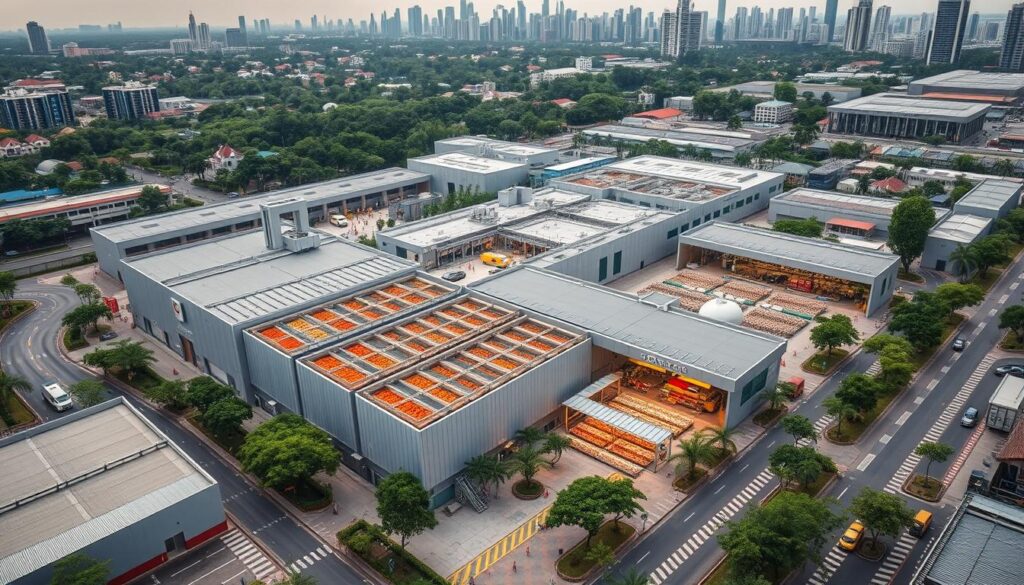
Good content and storytelling can make the customer experience better. With smart marketing, food factories can meet the growing demand for food. This makes them a solid investment opportunity in Singapore.
Case Studies: Successful Food Factory Investments
Investing in Singapore’s food factory sector can be very profitable. Companies like Oatly Group AB have shown success here. The real estate market in Singapore offers many chances to invest, including properties with the latest technology.
When you think about buying property in Singapore for food factories, look at other investors’ experiences. The market is known for its high standards and advanced technology. The government also helps with grants and incentives, boosting the sector’s growth.
New food factories like CT Foodnex and Food Vision are starting in Singapore. This offers chances for investment. The demand for sustainable and plant-based foods is growing, and the right investment can tap into this trend.
Investors should do detailed market research and feasibility studies before investing. Working with educational institutions can help solve the problem of finding skilled workers. With the right strategy, investing in Singapore’s food factory sector can be very rewarding.
Future Outlook for Food Factory Investments in Singapore
The future for food factory investments in Singapore property market looks bright. Demand for food products is set to grow. With over 2,100 food companies in Singapore, the industry’s share of GDP is expected to increase.
Food technology will be key in this growth. Companies will invest in new tech to improve efficiency and cut costs.
As a Singapore property investor, you can benefit from this trend. Look for a food factory in a good location to meet the rising demand. The Singapore property for sale has many options, including modern facilities.
By investing in the latest technology, you can earn steady returns. This also helps Singapore reach its goal of producing 30% of its food by 2030.
