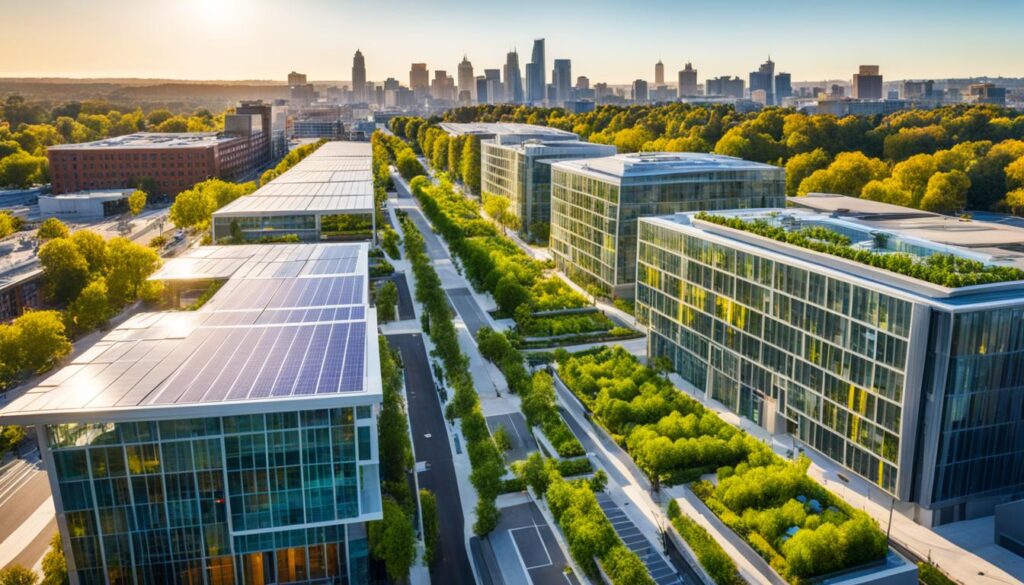
Sustainable architecture is revolutionizing the construction industry, bringing about a new era of eco-friendly building design. Architects and designers are embracing sustainable practices and incorporating green building technology to create structures that are energy-efficient and environmentally conscious. These sustainable architecture trends not only reduce carbon emissions but also promote sustainable construction practices, paving the way for a greener and more sustainable future.
Key Takeaways:
- Sustainable architecture trends are reshaping the construction industry
- Eco-friendly building design integrates environmentally conscious materials and green building technology
- Sustainable construction practices reduce carbon emissions and promote a greener future
- Bio-based insulation materials and carbon-storing building materials are gaining popularity
- Recycled and upcycled materials are being incorporated into construction projects
Bio-Based Insulation Materials and Carbon-Storing Building Materials
Sustainable architecture is at the forefront of innovation, finding new ways to create eco-friendly and energy-efficient buildings. Two exciting trends that are shaping the industry are the use of bio-based insulation materials and the development of carbon-storing building materials.
One notable bio-based material making waves in sustainable architecture is Mycelium. Derived from the root structure of mushrooms, Mycelium offers excellent insulation properties while being biodegradable and environmentally friendly. This bio-based insulation material provides an effective solution for reducing energy consumption in buildings, ensuring comfort while minimizing environmental impact.

Another trend in sustainable construction is the emergence of carbon-storing building materials. These materials have the unique ability to absorb more carbon dioxide (CO2) than they emit, effectively turning buildings into carbon sinks. A prime example is carbon-infused concrete, which not only offers superior strength but also captures and stores carbon throughout its lifespan.
By incorporating bio-based insulation materials and carbon-storing building materials, architects and designers are creating structures that are not only energy-efficient but also contribute to reducing carbon emissions. These innovations play a significant role in sustainable architecture, paving the way for a greener and more sustainable future.
Stay tuned for the next section where we explore the use of recycled and upcycled materials and the advancements in smart glass technology in sustainable architecture.
Recycled and Upcycled Materials and Smart Glass Technology
In the world of sustainable architecture, the use of recycled and upcycled materials is gaining momentum. Architects and designers are embracing the concept of repurposing materials such as recycled plastic and metal to create eco-friendly buildings. By giving new life to these materials, construction projects can significantly reduce waste and environmental impact.
One exciting trend in sustainable architecture is the upcycling of old shipping containers into modern homes. These repurposed containers not only provide a unique and stylish aesthetic but also showcase how sustainability can be integrated into contemporary design. Upcycling is not only environmentally friendly but also allows for creative and innovative building solutions.
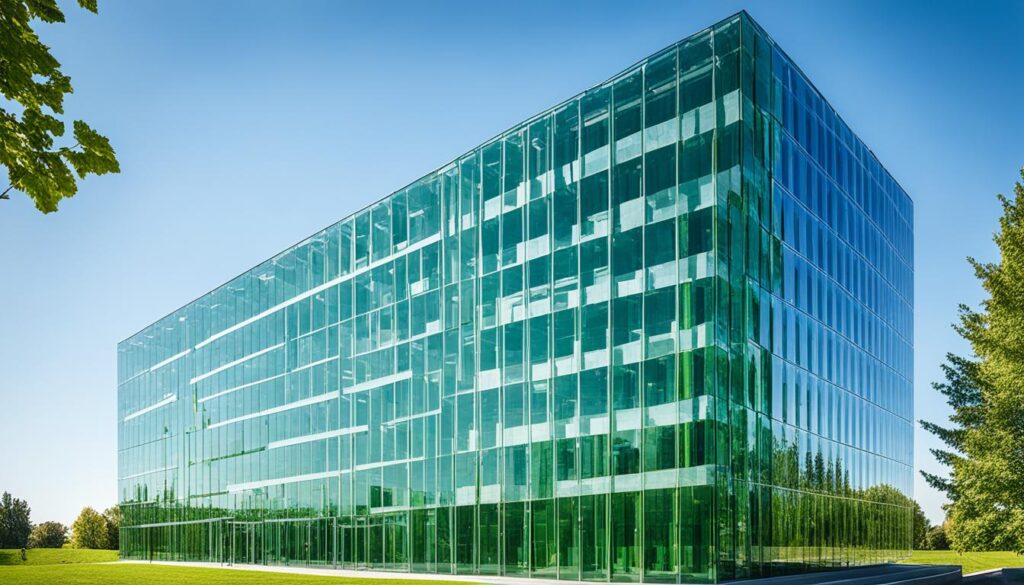
In addition to recycled and upcycled materials, smart glass technology is reshaping the way we think about sustainable architecture. Smart glass has the remarkable ability to adjust its opacity based on sunlight intensity, reducing the need for excessive HVAC usage and enhancing energy efficiency. This cutting-edge technology allows natural light to enter buildings while controlling heat and glare, creating a comfortable and sustainable indoor environment.
The Benefits of Recycled and Upcycled Materials and Smart Glass Technology
- Reduces waste and environmental impact
- Promotes creativity and innovative designs
- Increases energy efficiency and reduces reliance on HVAC systems
- Creates a comfortable and sustainable indoor environment
- Showcases sustainability as a stylish and fashionable choice
3D-Printed Buildings and Bamboo as a Green Steel
In recent years, 3D printing has made significant advancements in various industries, including architecture and construction. This technology has the potential to revolutionize the way buildings are designed and constructed, offering numerous benefits in terms of efficiency, cost-effectiveness, and sustainability.
One of the key advantages of 3D-printed buildings is the reduced waste generated during the construction process. Unlike traditional construction methods that often result in excess materials and construction debris, 3D printing uses only the necessary amount of materials, minimizing waste and environmental impact.
Moreover, 3D printing offers unparalleled design flexibility, allowing architects and designers to create complex and intricate structures that would be challenging or costly to achieve with traditional construction techniques. This technology enables the realization of innovative architectural designs and unique building forms, bringing a new level of creativity to the industry.
In terms of sustainability, 3D printing can further enhance its eco-friendly characteristics by utilizing sustainable materials. Bioplastics, derived from renewable sources, can be used as feedstock for 3D printers, reducing the reliance on fossil fuels and minimizing the carbon footprint of the construction process.
Another sustainable material gaining recognition in the construction industry is bamboo. Often referred to as “green steel,” bamboo possesses remarkable strength and durability. It also has a rapid growth rate, making it an excellent renewable resource that can be harvested sustainably.
Bamboo’s natural flexibility and earthquake resistance make it an ideal choice for sustainable construction. It can be used in various applications, from structural elements to interior finishes, contributing to the overall strength and resilience of the building. Additionally, bamboo has a lower carbon footprint compared to traditional construction materials like concrete and steel, further enhancing its sustainability credentials.
By incorporating 3D-printed buildings and bamboo as a green steel, the construction industry can embrace sustainable practices and create structures that are not only visually appealing but also environmentally friendly. These innovative technologies and materials are shaping the future of architecture, paving the way for a more sustainable and resilient built environment.
Solar-Active Facades and Green Roofs and Living Walls
Solar-active facades are revolutionizing sustainable architecture by harnessing the power of the sun. These facades integrate photovoltaic cells into building surfaces, generating electricity from sunlight and reducing carbon footprints. By converting solar energy into usable electricity, solar-active facades contribute to a greener and more energy-efficient future.
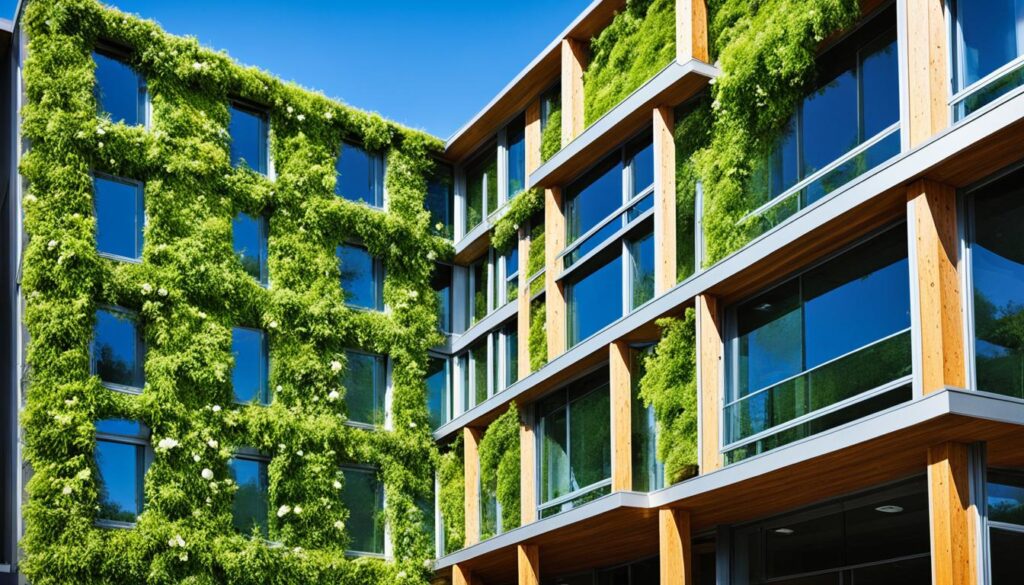
Green roofs and living walls are transforming urban landscapes by bringing nature back into the city. Green roofs, covered with vegetation, provide multiple benefits such as improved air quality, natural insulation, and enhanced biodiversity. They also mitigate the urban heat island effect, reducing energy consumption for cooling buildings. Living walls, on the other hand, are vertical gardens that not only add beauty to architecture but also purify the air, regulate temperature, and create a sense of calm in bustling cities.
Together, these green spaces on buildings establish a vital connection with nature and promote a healthier and more sustainable living environment in crowded cities like Singapore. They not only enhance the aesthetics of the urban landscape but also contribute to improving the overall well-being of residents. Solar-active facades, green roofs, and living walls exemplify the potential of sustainable architecture to integrate technology and nature for a brighter and greener future.
Source Links
- https://www.linkedin.com/pulse/10-latest-trends-sustainable-building-materials-revolutionizing
- https://www.linkedin.com/pulse/green-building-trends-2024-8th-innovation-steps-how-shape-cyste?trk=public_post_main-feed-card_feed-article-content
- https://gitnux.org/green-building-trends/
