
Singapore’s food industry is booming, drawing in both new and experienced players. Its prime location and top-notch industrial property make it perfect for food manufacturing firms to grow. The city-state is well-known for its rich food culture that tempts visitors worldwide.
The government is all in to help food factories succeed, offering grants and a friendly business environment. This guide will help you explore investing in Singapore’s food factory scene. You’ll learn about the market, the rules, and how to gauge profit.
Key Takeaways
- Singapore’s strategic location and excellent industrial infrastructure make it an attractive destination for food factory investments.
- The government’s strong support, including grants and incentives, has fostered a conducive environment for the growth of food manufacturing businesses.
- Understanding the target market, consumer trends, and conducting comprehensive market research are crucial for successful investment in Singapore’s food factory industry.
- Navigating the regulatory landscape, obtaining necessary licenses and permits, and protecting intellectual property rights are essential for legal and compliant operations.
- Evaluating the potential profitability and future trends in the industry can help investors make informed decisions.
Understanding Singapore’s Thriving Food Industry
Singapore is a leader in global food businesses. Thanks to its great location and strong government backing, it’s a prime spot for food companies. The city’s modern transport, efficient supply lines, and specialized industrial areas like Jurong Food Hub make it perfect for food production.
Strategic Location and Infrastructure

Singapore is right at the heart of Southeast Asia, with top-notch transport links. This sets it up well for food manufacturing. It boasts a smooth supply chain, high-tech logistics, and spacious industrial zones where food factories can grow and meet customers both near and far.
Diverse Culinary Scene and Consumer Demand
The love for great food in Singapore has created a big desire for new, quality food items. The city’s lively food scene, filled with dishes from all over, pulls in food lovers from around the globe. This has built a strong market for food makers of all kinds.
Government Support and Initiatives
The Singaporean government is keen on boosting the food industry. It backs this goal with grants, incentives, and a friendly business climate, drawing investors both local and foreign. Their efforts in research, tech sharing, and putting new ideas to work help keep the industry competitive and innovative.

Exploring the Rise of Food Factories
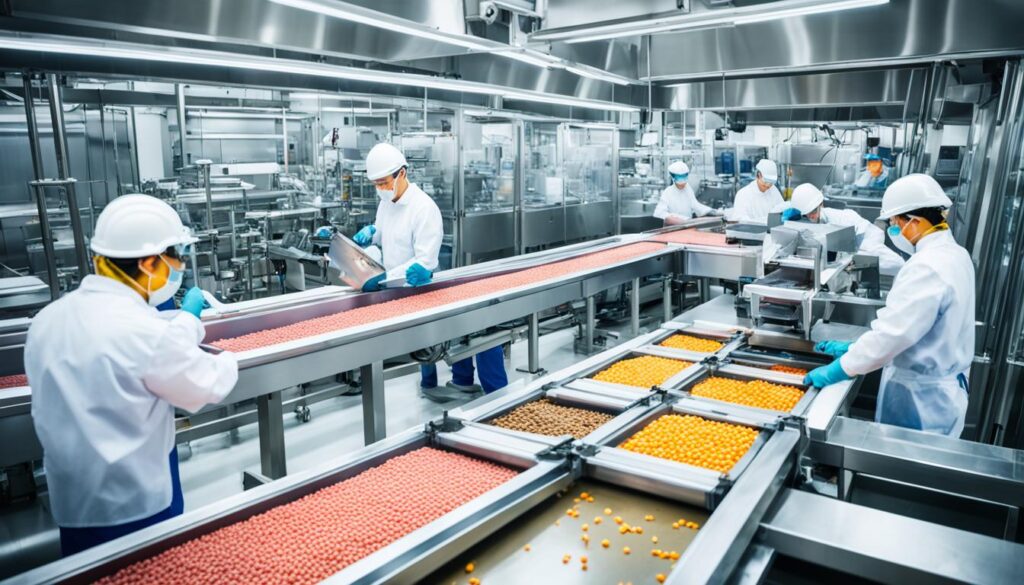
In Singapore, the rise of food factories is noticeable, meeting the demand for safe and top-quality food. These facilities use the latest technology and follow strict cleanliness rules. This ensures they produce excellent food for customers around the world.
State-of-the-Art Facilities and Technologies
Singapore’s food factories lead in using high-tech systems and new ways to make food. They rely on automation, robotics, and data analysis to be efficient. This helps them make safe food, proving their commitment to quality and safety.
Local and Export Markets
These factories in Singapore don’t just feed locals. They ship their products worldwide. They use Singapore’s strong food reputation and its global trade position. This helps them grow internationally.
Emerging Players: CT Foodnex and Food Vision
CT Foodnex and Food Vision are two new names in Singapore’s food production scene. With their sites at Mandai Estate, they bring fresh tech and top standards. Their focus on innovation and research aims to please customers near and far.
Key Considerations for Investing
Before you dive into Singapore’s food factory market, it’s smart to do your homework. You need to know who you’re selling to and what they want. This info is key because consumer tastes can make or break a business.
Understanding Target Market and Consumer Trends
It’s important to dig deep before investing. This means doing market research and studying the latest trends. For instance, people are increasingly looking for eco-friendly and tasty food. Knowing this helps you create products that sell well, both at home and abroad.
Conducting Market Research and Feasibility Studies
Market research and feasibility studies are a must. They give you a look at what you’re up against and what’s possible. Through this, you can spot trends, find out what people like, and identify areas for growth. Armed with this information, you can make smarter choices in the market.
Developing a Solid Business Plan and Financial Projections
Setting up a strong business plan and clear financial forecasts is vital. This not only attracts potential investors but also outlines your road to success. Things to consider include finding the right labor, forming solid partnerships, and figuring out how to grow. With a solid strategy in place, your chances for long-term success are much better.
Industrial Property Rights and Regulations
Investing in Singapore’s food factory industry means understanding tough rules. The country’s AVA makes sure food production places follow laws closely.
Navigating Singapore’s Regulatory Landscape
Singapore keeps tight checks to guarantee food is safe and good. Knowing and following these rules helps businesses run smoothly and look good. By obeying the AVA’s rules, businesses show they care about consumers. This earns trust with others in the Industrial Property and Intellectual Property Rights worlds.
Licensing and Compliance Requirements
For food factories in Singapore, getting the right permits is a must. Investors need to understand and meet AVA’s rules. This includes keeping food safe, getting Trademarks and Patents, and managing Trade Secrets and Licensing Agreements well.
Not following these can lead to trouble and hurt a company’s standing.
Intellectual Property Protection
Protecting Intellectual Property Rights is key, like new ways to make things, special recipes, and branding. It’s important to focus on Technology Transfer and Innovation Management. This way, a business can stay ahead and grow over time.
Efforts in Research and Development help create new foods and ways to process them. These can then be protected by different Intellectual Property laws.

Evaluating Profitability and Future Trends
Thinking about investing in Singapore’s food factory industry? It can be a smart move. But, you need to plan carefully. Look at things like how much it costs to make products, what people want to buy, who else is making similar things, and if a business can grow.
Singapore is great for food factories because they have a strong system for making things, a fast way to deliver those things, and can send products all over the world. They also have the latest technology, use machines to help do work, and work in ways that don’t hurt the environment. This makes running a business there smoother and can help save money, which in turn can boost how much money a business makes.
It’s also a good idea to really think about costs and how much money can be made before starting. Getting advice from experts who know money can help a lot. This is where things such as Intellectual Property Rights and Licensing Agreements come into play. These rules help make sure a business can keep going strong for a long time.
The food factory business in Singapore is headed for good things. People want foods that are good for the planet and don’t always come from animals. Also, buying food online is more popular than ever. This is pushing companies to come up with new ideas and ways to sell their food. Staying ahead in the market will mean being really good at coming up with ideas, making new things, and then selling them well. These are things like Innovation Management and Research and Development.
