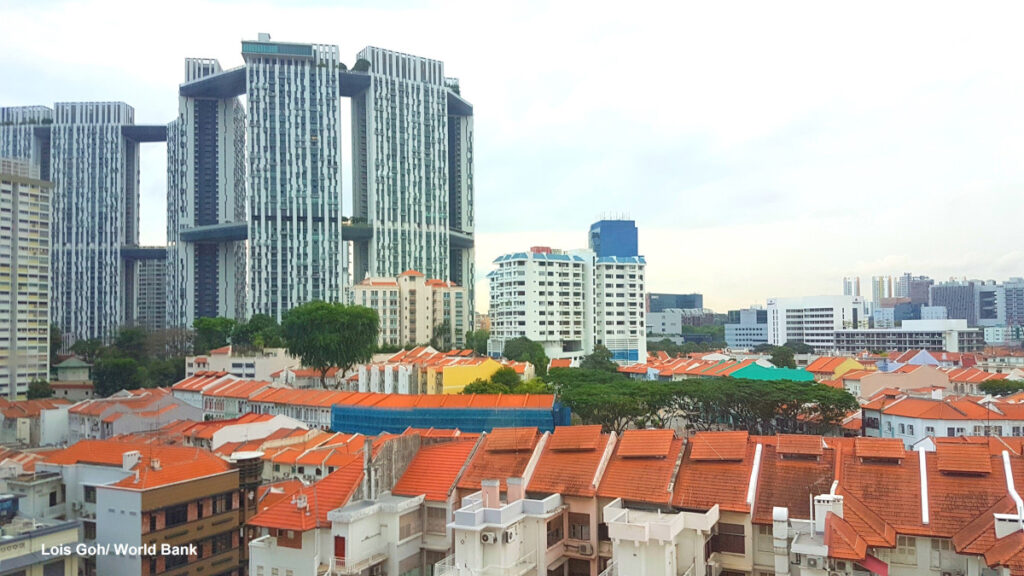
Every homebuyer in Singapore knows that the journey towards owning your dream property is akin to sailing the vast seas — it requires careful navigation, the right tools, and a deep understanding of the waters ahead. In the landscape of high-rise apartments and sprawling new developments, understanding your property financing solutions is as critical as the blueprint to your future home. Catering to the unique tapestry of home investment needs, Singapore property financing becomes the foundation upon which your property purchase journey is built – a journey filled with aspirations, meticulous planning, and the pursuit of solid ground in the form of a place to call your own.
Let’s demystify the varied financing methods available in this vibrant city-state. Whether you’re setting sights on your first home or looking to expand your investment portfolio, our guide sheds light on crafting that essential financial game plan, tailor-made to fit your personal narrative in Singapore’s dynamic real estate market.
Key Takeaways
- Develop a comprehensive understanding of property financing to aid your home buying decisions.
- Explore and evaluate different property financing solutions, including bank loans, HDB loans, and CPF usage.
- Anticipate additional costs like stamp duties and legal fees to form a holistic budget.
- Recognize the advantages of pre-approval from financial institutions to streamline your property search.
- Consider seeking advice from financial experts to fine-tune your Singapore property financing strategies.
Understanding the Singapore Property Financing Landscape
Delving into the realm of property investment in Singapore necessitates a fundamental understanding of the diverse financing options available to investors and homebuyers. With a landscape comprising both public and private lending facilities, individuals looking to invest in real estate must consider various factors such as loan types, interest rate structures, and the utilization of the Central Provident Fund (CPF). This section examines key components that affect decision-making when navigating through Singapore property financing.

Bank Loans vs. HDB Loans: Choosing the Right Path
When it comes to securing property investment loans in Singapore, two predominant routes present themselves: bank loans and Housing Development Board (HDB) loans. HDB loans offer the stability of a fixed interest rate, appealing to those who prefer consistent repayments without the anxiety of fluctuating rates. Conversely, bank loans are characterized by their flexibility, offering a range of products with variable terms, including attractive best mortgage rates that competitively respond to market shifts.
- Bank loans facilitate a higher borrowing limit and longer loan tenures, crucial for larger property investments.
- HDB loans resonate with those eligible and seeking loans capped at 25 years for HDB flats.
Fixed Rate vs. Floating Rate: What’s Best for Your Home Loan?
The choice between a fixed rate and a floating rate package is pivotal in shaping the fiscal trajectory of a property borrower. With a fixed rate, one enjoys the tranquility of immunity to interest rate escalations during the stipulated period. On the other hand, floating rate packages are aligned with market indicators such as the Singapore Interbank Offered Rate (SIBOR), Swap Offer Rate (SOR), or the soon-to-be standard Singapore Overnight Rate Average (SORA).
- Fixed rate options are ideal for those who prioritize budgeting certainty over the loan period.
- Floating rates benefit the financially agile who can capitalize on the potential downtrends in interest rates.
The Role of CPF in Financing your Home Purchase
In Singapore, the engagement of CPF savings emerges as a linchpin for many in their property financing strategy. Residents use their CPF monies towards the initial down payment and ongoing mortgage installments, which can significantly offset the need for cash outlays, ensuring a smoother Singapore property financing experience.
- CPF funds serve as a critical lever to amass the necessary deposit, diminishing the burden of upfront cash payment.
- Investors must remain vigilant regarding CPF withdrawal limits and potential implications for retirement planning.
Armed with tools like a reliable mortgage calculator and knowledge of prevailing market rates, investors and prospective homeowners alike can navigate Singapore’s property financing landscape with enhanced expertise and confidence.
Navigating Mortgage Packages in Singapore
Securing a competitive home loan is a key step in buying property, and with Singapore offering a myriad of mortgage packages, it’s critical to understand and compare the various options available. Choosing the right mortgage hinges on several factors including interest rates, loan tenure, and the tangential benefits such as mortgage insurance. An informed decision can lead to significant long-term savings and ensure that your property financing solution is the best match for your financial situation.

Evaluating Mortgage Terms: Interest Rates and Loan Tenure
Interest rates and the tenure of the loan are the linchpins of any mortgage package. They directly affect the monthly repayments and the total amount repaid over the life of the loan. In Singapore, potential homeowners face a choice between loans with fixed interest rates—providing consistency in repayments—and loans with variable rates, which move with market trends and could offer savings if rates decrease.
- Fixed Rate Mortgages: Predictability in monthly payments, unaffected by fluctuating market rates.
- Floating Rate Mortgages: Potentially lower rates linked to SIBOR or SORA but with less payment stability.
How to Compare Home Loan Options Effectively
To ensure that you’re getting the best mortgage rates, employing a reliable mortgage calculator is indispensable. This tool allows for an effective home loan comparison by estimating the monthly repayments and the total interest payable. It’s advisable to consider not only the rates but also other features like prepayment flexibility, loan-to-value ratio, and penalties for early redemption.
- Use a mortgage calculator for an accurate estimation of loan costs.
- Compare fixed and variable rates to determine which best suits your financial stability and risk preference.
Importance of Mortgage Insurance for Homebuyers
Mortgage insurance is another crucial element for homebuyers to consider. This form of protection can cover outstanding loan amounts in the event of unforeseen circumstances, thus securing your property investment and providing peace of mind. In Singapore, it’s common for lenders to require insurance as part of the loan agreement to mitigate their risk.
- Understand the terms and benefits of mortgage insurance policies.
- Consider how mortgage insurance could affect your family’s financial security.
As a prospective homeowner in Singapore, it’s imperative to navigate property financing solutions with a keen eye on securing not only the best mortgage rates but also a package that provides security and aligns with your long-term financial goals.
Criteria for Eligibility: Securing a Home Loan in Singapore
When embarking on the journey to secure a housing loan in Singapore, understanding the eligibility requirements is crucial to unlocking the door to your dream home. Known for its robust financial infrastructure, Singapore offers aspiring homeowners a series of benchmarks that determine their loan qualifications.
A key determinant is one’s income stability, which signifies the capacity to meet monthly obligations. A consistent and verifiable income stream provides lenders with confidence in an applicant’s ability to repay. Additionally, a solid credit standing is indispensable; it is the financial litmus test that reflects your history with debt and fiscal responsibility. The rule of thumb for a favorable debt-to-income ratio ensures that your financial commitments do not outstrip your earnings.
To elaborate on these prerequisites, let’s take a closer look at the factors influencing eligibility:
- Credit Score: A high credit score is paramount, as it exemplifies a history of prudent financial behavior and diligent repayment.
- Income Proof: Salary slips, tax returns, and CPF contributions statements are required, divulging a clear picture of your earnings.
- Self-Employment Records: For entrepreneurs, income stability might be demonstrated through business financials and income assessments.
- Debt-to-Income Ratio: Lenders evaluate your existing debts against your income to ensure sustainable borrowing.
In the case of HDB loans, securing the Home Loan Eligibility (HLE) letter is a vital step; it provides details on the loan quantum and installment amounts you can expect. Irrespective of the loan type, having your documentation in order, such as your NRIC and employment records or HDB letters, when applying for In-Principle Approvals (IPAs) is of paramount importance.
Compiling these documents serves as a gateway to the next stage of your property purchase journey. Properly evaluating your financial standing with a mortgage calculator can save both time and resources, ensuring you align your aspirations with the best mortgage rates and a home loan comparison, navigating you towards a financially secure homeownership.
By meticulously adhering to these eligibility criteria, borrowers can lay a solid foundation for successfully applying for a housing loan in Singapore, setting the stage for acquiring a valuable asset in this dynamic property market.
Comprehensive Breakdown of the Home Buying Process
Embarking on the journey to homeownership in Singapore involves several critical steps, each pivotal to the successful acquisition of property. Understanding the importance of aligning your financial resources with your real estate goals is the key to a smooth transaction. Staying well-informed about property financing options Singapore, securing a housing loan in Singapore, and exploring property investment loans are essential facets of this process.
Initial Considerations: Budget and Financing Pre-Approval
Before diving into the property market, it’s imperative to establish a solid financial foundation. A thorough budget assessment considering your income, expenses, and savings will provide a clear picture of what you can afford. Following this, obtaining a pre-approval for a housing loan is a strategic move. This not only sets realistic expectations about the types of properties within your reach but also enhances your credibility as a buyer when negotiating with sellers. From banks to specialized lenders, Singapore offers a variety of financing options tailored to different property investment strategies.
The Key Steps from Option to Purchase to Sales Completion
Once your budget is determined and financing pre-approved, the actual purchase process unfolds. Here’s an essential timeline to guide you through the key stages:
- Diligently research the market to identify the property that meets your needs and budget.
- Engage a reliable real estate agent and secure an Option to Purchase (OTP) when ready to commit.
- Perform due diligence, including property inspections and reviews of legal documents.
- Finalize the mortgage details, ensuring you’ve selected a loan that mirrors your financial capabilities and investment outlook.
- Navigate the sales agreement with the aid of legal professionals, ensuring all contractual obligations are clear and beneficial.
- Make the necessary payments, from down payment to stamp duties, and comply with all regulatory requirements.
- Complete the purchase with the final balance payment and take formal transfer of the property ownership.
The path to property ownership in Singapore is a structured yet dynamic experience, demanding keen attention to detail at each chapter of the story. Aspiring homeowners should be ready to make informed decisions at every turn, backed by professional advice and a sound understanding of the financial landscape. A thoughtful approach to exploring property financing options in Singapore will contribute to a rewarding and smart property investment.

Property Financing Options Singapore for Foreign Investors
For foreign investors keen on participating in the vibrant Singapore property market, comprehending the unique property financing solutions can mark the difference between a sound investment and a missed opportunity. Singapore’s real estate financing landscape offers property financing options Singapore specifically crafted to accommodate foreign investment intricacies. While navigating through these options, non-resident investors face upfront challenges, such as heftier down payments and more stringent qualification prerequisites when compared to local buyers.
One key step toward successful investment in Singapore’s real estate is the utilization of various resources, including a reliable mortgage calculator. This tool is an invaluable resource for calculating potential monthly repayments and understanding the impact of different best mortgage rates on the overall cost of the mortgage. While Singapore boasts of competitive rates, foreign investors must diligently research to find the most advantageous rates and terms that suit their financial plans.
Collaborating with experienced mortgage consultants can prove beneficial for non-resident investors. These professionals offer bespoke Singapore property financing advice and assist in deciphering the intricacies of credit options available to foreign investors. The expert guidance from such entities ensures a smoother transaction process, from application to approval, ensuring that investors adhere to Singapore’s regulatory standards while seeking optimal financing solutions.
- Understanding down payment requirements and sourcing for competitive down payment rates.
- Familiarizing with loan-to-value (LTV) ratio constraints specific to foreign investors.
- Identifying banks and financial institutions offering the most favorable interest rates.
- Calculating the impact of stamp duties and additional costs exclusive to foreign investors.
- Assessing the long-term financial implications of the investment through various mortgage scenarios.
Indeed, property financing options Singapore for foreign investors are imbued with complexity but also ripe with opportunity. With careful planning and the right expert advice, non-resident investors can navigate Singapore’s property financing terrain with confidence, tapping into lucrative investment prospects the city-state has to offer.
Financial Regulations Impacting Property Loans
Property financing in Singapore is influenced by stringent financial regulations that shape how borrowers and lenders engage in the market. Key measures such as the Total Debt Servicing Ratio (TDSR), Mortgage Servicing Ratio (MSR), and Loan-to-Value (LTV) limits have been instituted to ensure financial stability and prudence in the property market. These regulations are paramount for anyone looking into property financing options in Singapore, using tools like a mortgage calculator to assess the best mortgage rates and making a thorough home loan comparison before making any decisions.
Understanding Total Debt Servicing Ratio (TDSR) and Mortgage Servicing Ratio (MSR)
As a pivotal component in managing housing affordability, TDSR and MSR embody the commitment of the Singapore government to prevent individuals from over-leveraging. The TDSR requires that an individual’s total monthly debt obligations do not exceed 60% of their gross income. This includes not only the property loan but also any other debts such as car loans, personal loans, and credit card payments. Conversely, the MSR, which applies solely to HDB property loans, stipulates that your monthly mortgage repayments cannot exceed 30% of your gross monthly income. Adhering to these ratios is necessary for securing a loan and reflects responsible lending and borrowing practices in the Singapore property market.
Loan-to-Value (LTV) Limits: Calculating Your Borrowing Capacity
The LTV ratio is a critical financial metric used to determine the maximum amount a homebuyer can borrow when considering a home loan. In Singapore, regulations set the LTV limit at 75% for the first property loan, which implies that a minimum 25% down payment is required. For subsequent property loans, a more conservative LTV of 45% is applied, necessitating a larger down payment and reducing the financial burden of multiple loans. Understanding and calculating the LTV against your property of interest is an essential step, and prospective property owners often utilize a mortgage calculator for precise estimations, ensuring they are seeking the best mortgage rates and potentially saving significantly on interest over the loan’s tenure.
Advantages of Engaging Mortgage Specialists and Financial Advisors
Navigating the property market in Singapore can often seem like traversing a labyrinthine network of rates, rules, and regulations. This complexity underscores the benefits of engaging mortgage specialists and financial advisors, professionals who can illuminate the intricacies of property financing solutions. Their industry expertise is quintessential for devising financing strategies that best suit an individual’s financial position and are aligned with their long-term property investment objectives.
Why Professional Guidance Makes a Difference
The assistance of mortgage specialists and financial advisors is pivotal when it comes to locking in the best mortgage rates available in Singapore. Such guidance transforms the home loan comparison process into a strategic exercise, allowing prospective borrowers to effectively discern and negotiate the terms that serve their interests. Beyond the immediate task of securing a loan, these professionals provide invaluable insights into market trends and product features, crucial for informed decision-making.
Long-term Financial Planning for Property Investment
When considering property financing options in Singapore, a laser focus on the long-term horizon is vital. Professional advisors ensure that debt liabilities are manageable not just at present, but well into the future, crafting a robust financial blueprint that accounts for potential market shifts and personal circumstances. By evaluating ROI and risk factors, these advisors play a vital role in building a resilient investment portfolio, fostering a firm ground for financial stability and growth in the property market.
