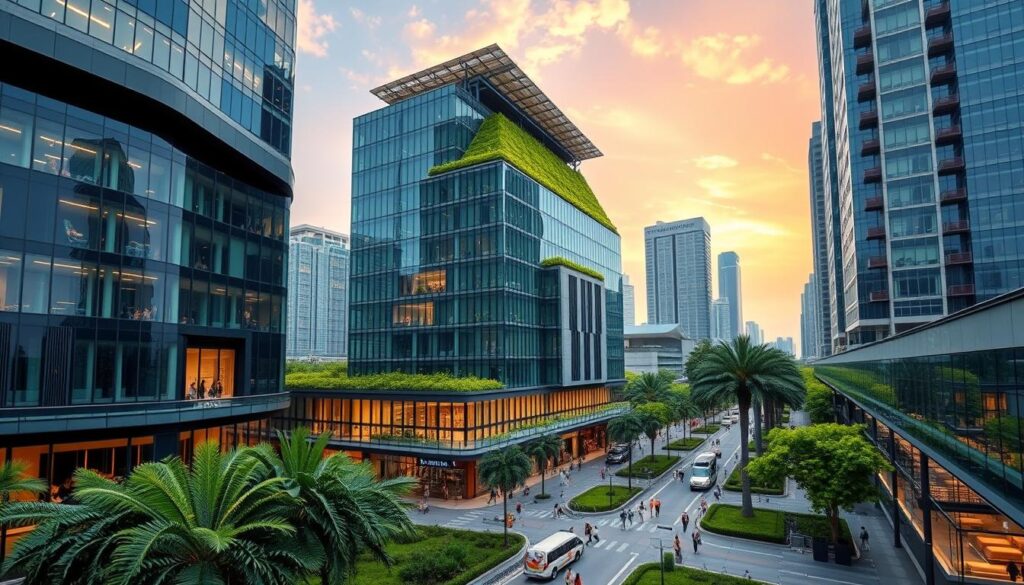
The commercial real estate in Singapore is changing fast. This is thanks to new technology in property management. CBRE Property Management leads the way, managing over 100 properties with 300 experts. They use data and innovation to keep properties valuable, with a 99% renewal rate.
In Singapore, the proptech industry is booming. Companies like MetroResidences and Propseller are changing how we manage properties. They offer new ways to handle rentals and transactions, making commercial spaces better.
Key Takeaways
- CBRE Property Management oversees over 100 commercial and residential properties in Singapore with a team of 300 professionals.
- The proptech industry in Singapore is growing, with companies offering cutting-edge property management solutions.
- Tech-driven property management is driving transformation in the commercial real estate sector, improving efficiency and enhancing property value.
- Innovative platforms like CBRE’s Host and PULSE platforms are elevating tenant experiences and optimizing building operations.
- The adoption of tech-driven property management solutions in Singapore’s office spaces is witnessing exponential growth, with a 15% annual increase.
Overview of Commercial Property Management in Singapore
In Singapore’s bustling commercial real estate scene, managing properties well is key. It helps make the most of what you have and keeps things running smoothly. Properties like office buildings, shops, and factories need special care to keep tenants happy and profits high.

Companies like CBRE Property Management offer full-service property management. They use their size, knowledge, and new tech to cut costs and boost efficiency. They work hard to add value to properties by setting clear goals and using the latest management tools.
The use of property technology (proptech) is growing in Singapore. Tools like cloud computing, AI, VR, and blockchain are being used. For example, Propseller uses data to make selling properties easier and find the right buyers, helping property owners succeed.
The Role of Technology in Property Management
Technology is now key in property management, making things more efficient and improving tenant experiences. CBRE’s PULSE platform is a great example. It brings all property data and operations together, offering real-time analytics and smart building management.
Automation tools have changed property management a lot. They help with scheduling maintenance and financial reports. With data analytics, managers can make better decisions about their properties and tenants. This helps them run buildings better, save on energy, and plan for maintenance.
The Internet of Things (IoT) has made property maintenance more precise. Cloud-based software makes managing properties from afar easier. It also helps with teamwork and keeps everyone updated, making the job smoother.
Technology does more than just make things run better. It lets people see properties online, which helps with marketing. It also makes talking between managers, landlords, and tenants clearer and easier.
As property management keeps growing, technology will keep being a big part of its success. Using data, automation, and new ideas, managers can offer better services. They can also reach more of the market and stay on top in the fast-changing world of Commercial Financing and Land Acquisition.
Benefits of Implementing Tech Solutions
In Singapore, the commercial property world is changing fast. Technology is now key for property managers. A JPMorgan survey shows leaders are optimistic about this year. Almost a quarter plan to use tech to improve operations.
Platforms like Qornerstone’s cloud system make work easier. They handle things like mobile payments and bank checks automatically. This makes work more efficient and gives managers quick insights to act on.
CBRE’s Host platform mixes tech and hospitality to improve the tenant experience. It helps managers understand what tenants need better. This leads to happier tenants and stronger relationships.
More and more, commercial real estate is using proptech. It’s about saving money, boosting productivity, and meeting tenant needs. Property managers who use tech will do well in this fast-changing world.
Popular Technology Solutions in the Market
Singapore’s property management market is using new tech to make things easier and better for tenants. Qornerstone is a key player, offering tools for leasing, managing assets, and estates. It helps manage everything from talking to tenants to handling money.
IoT devices are being used in smart buildings. They let managers watch and control things like air, lights, and security in real time. This helps save energy, makes buildings work better, and makes tenants happier.
Virtual and augmented reality are changing how we see and plan spaces. They let people explore Industrial Properties and try out different layouts online. This makes choosing a space easier and faster.
Platforms like REALly’s B2B real estate marketplace are also making waves. They bring the SaaS model to the industry, helping manage all kinds of properties. These cloud-based tools give managers one place to manage everything, from finding tenants to fixing things.
Challenges in Adopting Technology
Introducing technology in commercial property management has big benefits. But, the adoption process comes with its own set of challenges. The cost of comprehensive platforms like Qornerstone can be high, making it hard for some managers to afford.
Also, setting up new systems with old ones can take a lot of time and effort. This ensures a smooth transition and keeps data compatible.
Another big challenge is the learning curve for staff and tenants. Managers need to invest in training and support. This helps everyone use the new tools effectively, but it adds to the costs.
A survey showed that 34% of employees find poor technical experiences a big problem in their offices.
Despite these hurdles, the real estate industry is moving towards technology. A Deloitte study found that 61% of commercial real estate firms still use old systems. But, nearly half are working to update their tech.
The global PropTech market is growing fast, at 15.8% annually from 2022 to 2030. This shows the industry’s push towards digital change.
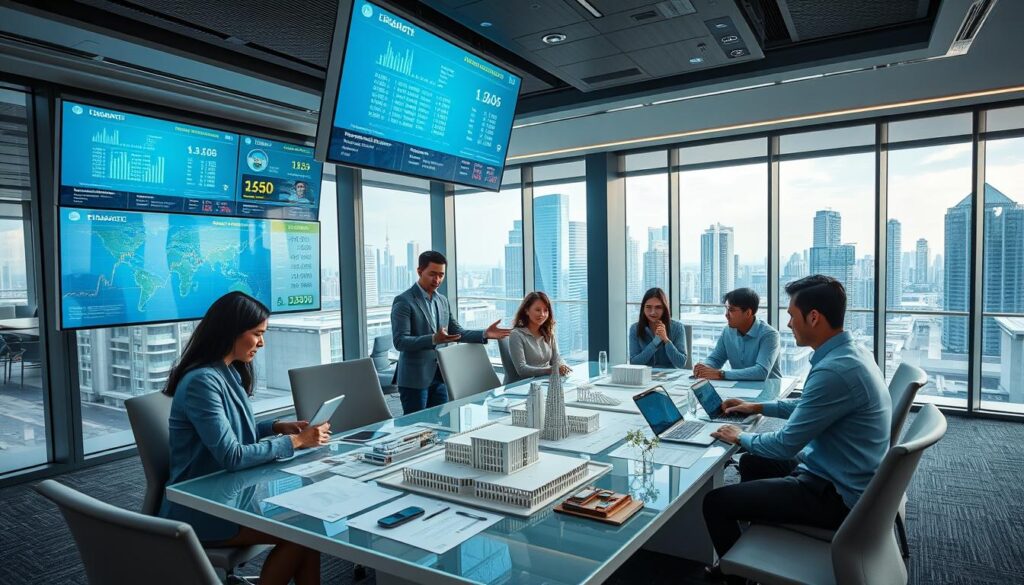
As the real estate world changes, property managers who tackle tech challenges will thrive. They’ll enjoy better data, automated tasks, and happier tenants.
Case Studies of Tech-Driven Property Management
In Singapore, the move to tech-driven Commercial Property management is growing fast. Leaders like IHH (Parkway Hospitals), Singapore Food Agency (SFA), and Jurong Port are using Qornerstone Asset’s platform. They’ve seen big improvements in how they work together and cut costs.
CBRE, a top name in Commercial Property management, has a 99% renewal rate. They work with big names like M&G and CDL. Their use of tech helps them manage data better and serve tenants well.
These leaders show how key it is to make decisions based on data. They use one platform for all property management tasks. This approach helps them save on energy, cut costs, and make tenants happier.
Smart building systems and predictive maintenance are changing the game. They help buildings last longer and work better. Mobile apps and online portals make life easier for tenants, allowing them to pay rent online and communicate easily.
Future Trends in Commercial Property Management
The commercial property management scene in Singapore is changing fast. New technologies and a focus on sustainability are leading the way. Office Buildings and Industrial Properties are key to the city’s economy. We can expect exciting changes in this sector.
Artificial intelligence (AI) and machine learning are becoming big in property management. By 2024, AI will make processes smoother and improve tenant experiences. It will use data to make smart decisions. Already, 14% of companies are using AI, and 23% are testing it.
Sustainability is a big deal, with green buildings getting higher rents and sale prices. Using energy-efficient systems and renewable energy is becoming more important. It helps businesses meet global goals like Net Zero and ESG targets.
Smart building technologies are also on the rise. They allow for remote management, better energy use, and improved comfort and security. As more businesses want flexible spaces, property owners are adapting. They’re creating spaces that encourage teamwork and well-being.
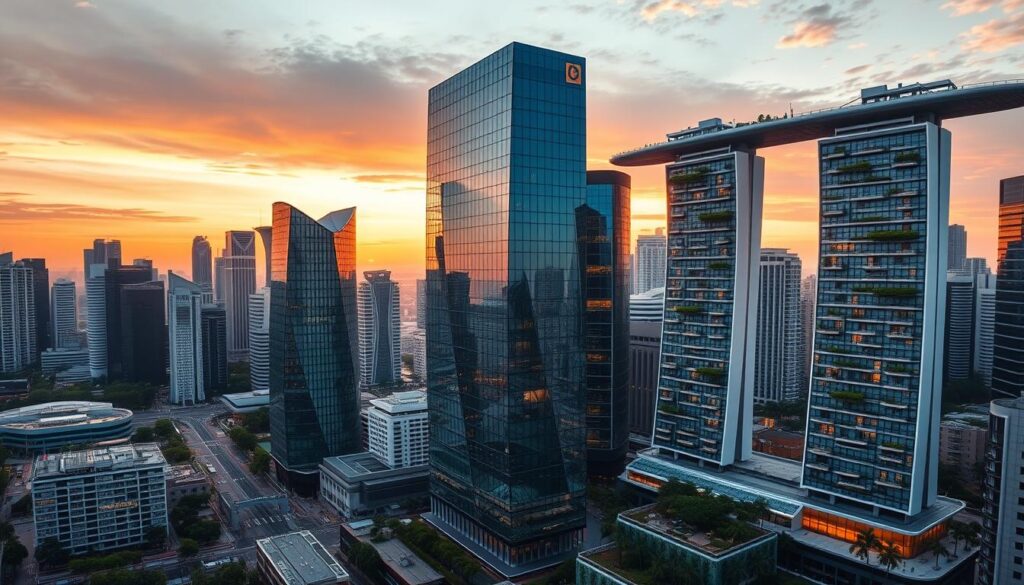
Predictive maintenance is becoming popular too. It uses sensors and data analysis to fix problems before they happen. This approach makes buildings last longer and improves tenant satisfaction.
The Impact of Remote Work on Office Spaces
Remote work has changed office spaces in Singapore a lot. Property managers are now focusing on flexible workspaces and better digital tools. They are also making sure offices are safe and healthy for everyone.
Technology like apps and smart locks is key in managing these new office setups. More people are using flexible offices and co-working spaces. These places offer a chance to work together and network, which is great for remote workers and small businesses.
The move to remote work has made traditional offices less popular, especially in big cities. But, suburbs are seeing more people want to work there because it’s closer to home. Landlords are adding tech and amenities to make offices better and more appealing.
The future of office spaces is still changing. We’ll see a mix of old and new work styles. Property managers and developers need to be quick to adapt to these changes to keep offices relevant in Singapore.
Regulatory Considerations in Singapore
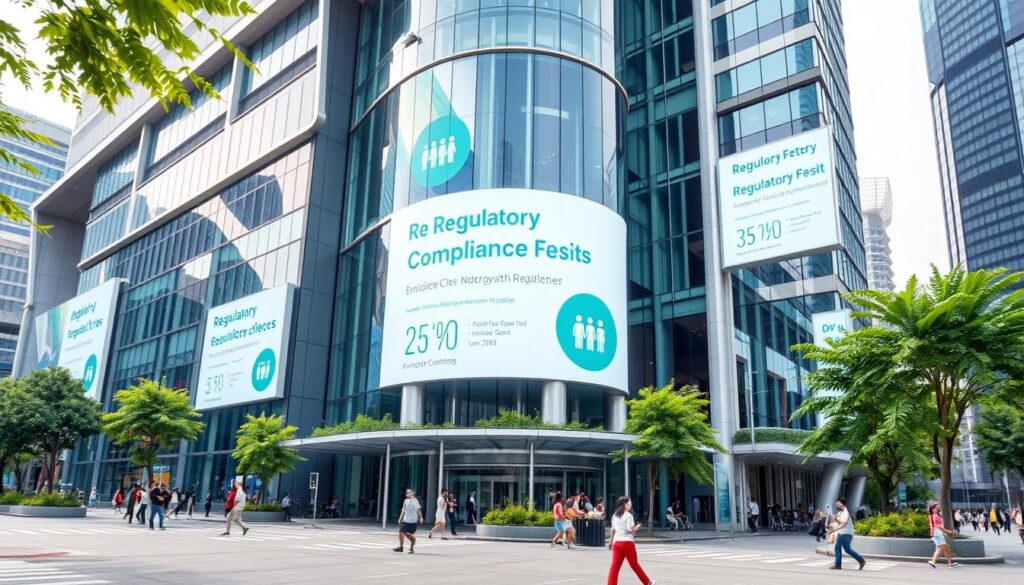
Property managers in Singapore’s Commercial Real Estate industry face a complex set of rules. They must follow local laws on property management, leasing, and upkeep. With technology’s rise in Property Management, protecting data has become a big deal.
Commercial properties in Singapore pay a 10% property tax on their annual value. The Buyer’s Stamp Duty (BSD) ranges from 1% to 6%, based on the property’s value. For industrial properties, Seller’s Stamp Duty (SSD) can hit up to 15% in the first year. Also, a 9% Goods and Services Tax (GST) is charged on commercial properties, which can’t be covered by CPF or bank loans.
Sustainability rules are also important for Commercial Real Estate in Singapore. Buildings over 5,000m2 must meet certain environmental standards. Projects starting from 1 Dec 2021 must also follow these rules. Developers must have plans to stop money laundering and terrorism financing.
Platforms like Qornerstone must follow Singapore’s data protection rules while offering digital solutions. Understanding and following these regulations is key for Commercial Real Estate professionals in Singapore. It ensures their operations are legal and sustainable.
Conclusion: The Future of Commercial Property Management in Singapore
The future of commercial property management in Singapore is set to be tech-driven. Property managers and investors need to adapt to this change. Companies like CBRE Group Inc. and Qornerstone are already using new technologies.
They are making property management more efficient and improving the tenant experience. They also use data to make better decisions.
The commercial real estate market in Singapore is changing fast. Technology will play a big role in making things better. It will help with workflows, property performance, and meeting tenant and investor needs.
With more people shopping online, there’s a big demand for logistics spaces. There’s also a focus on green buildings. Property managers need to keep up to stay competitive in the Commercial Property world.
The future of Real Estate Investing in Singapore looks bright. There are chances in industrial and logistics properties. The data center and office space markets are also growing.
By using technology and keeping up with market changes, property management companies can thrive. They will help Singapore’s commercial real estate grow even more.
