
The commercial property scene in Singapore is changing fast. Smart office spaces are leading this change, making work better for businesses. These spaces are all about teamwork and using the latest tech.
They offer flexible, green, and efficient work areas. As Singapore grows as a top business spot, smart offices are becoming more common. They meet the needs of companies in many fields.
Key Takeaways:
- Singapore’s commercial property market is witnessing a surge in smart office spaces, driven by the need for flexible, sustainable, and tech-driven work environments.
- Companies are embracing open floor plans and incorporating flexible work areas to cater to diverse employee preferences and boost collaboration.
- Sustainability is a key focus, with organizations implementing energy-efficient systems and eco-friendly materials to reduce their carbon footprint.
- The Asia Pacific Smart Office market is projected to grow at a CAGR of 10.5% between 2024 and 2029, driven by the demand for seamless technology-enabled management tools.
- Innovative smart office spaces are poised to reshape the commercial property landscape in Singapore, catering to the evolving needs of businesses in the region.
Introduction to Smart Office Spaces in Singapore
The business world is changing fast. This means we need new ways to work, like smart office spaces. In Singapore, these spaces are becoming key to making work better and greener.

Smart offices use cool tech like the Internet of Things and artificial intelligence. They make work better for everyone. This includes offices, schools, and hospitals. These spaces solve big problems like keeping things safe, managing space well, and making workers happy.
JustCo is leading the way in smart workspaces in Singapore. Their office at The Centrepoint has the latest tech. This includes facial recognition and card-free access. It also lets people use space as they need it.
By working with Switch, JustCo is changing how we work. They offer businesses the flexibility and efficiency they need. This helps them succeed in today’s fast-changing world.
Current Trends in Singapore’s Commercial Property Market
The commercial property market in Singapore is changing fast. The COVID-19 pandemic has made remote and hybrid work more common. This has led to a big demand for flexible office spaces.
Flex offices and coworking spaces are growing quickly. They let businesses adjust their space needs easily. This is a big change from traditional office setups.
Singapore is now a top market for flex office space in Asia-Pacific. This shows people want more flexible work places. It’s changing how businesses lease and finance their offices.
Other trends are happening too. Retail sales are expected to rise with big events in 2024. Orchard Road is still a very popular shopping spot.
Food and drink sales have gone up by 12.2% so far this year. Retail rents on Orchard Road might go up by 3 to 5% in 2024.
In the industrial sector, more space will be available. This could help keep rent and prices stable. Higher interest rates have cooled demand, but more space might help.
The commercial property market in Singapore is always changing. It’s adapting to new business needs and economic shifts. Trends like flexible workspaces, strong retail, and changes in industrial properties are shaping the future.

Key Technologies Driving Smart Offices
Smart offices in Singapore are using the latest technologies to boost efficiency and user experience. Internet of Things (IoT) devices are being added to Commercial Property and Office Buildings. This lets landlords and Property Management teams control systems like lighting, temperature, and how many people are there.
Artificial intelligence (AI) and data analytics are key in making spaces better. They help use space wisely, save energy, and give insights for smart decisions. Features like facial and smile recognition are used for access control and to make interactions better in the workspace.
Building Management Systems (BMS) act as the brain of smart buildings. Energy Management Systems (EMS) watch over energy use in all systems, cutting down costs. IoT devices, like sensors and smart meters, gather data on temperature, how many people are there, and energy use. They make building functions automatic and allow for quick improvements.
The use of smart tech in Commercial Property and Office Buildings saves money, is better for the planet, and makes users happier. As the market grows, adding smart features like smart lighting, HVAC optimization, and renewable energy will be key. This will help office spaces stay up-to-date and meet the needs of today’s businesses.
Benefits of Smart Office Spaces for Businesses
Smart office spaces are changing how businesses work in Singapore. They offer many benefits that make them great for real estate investments. This includes retail spaces and industrial properties.
Productivity is a big plus, thanks to smart offices’ collaborative environments and tools for work management. Employees are happier with flexible work areas, better air, and personalized settings. Plus, smart offices save money by using energy wisely and making the most of space.
Sustainability is key for modern businesses, and smart offices are eco-friendly. They use green materials and save energy. This meets the growing need for sustainable real estate in Singapore’s market.
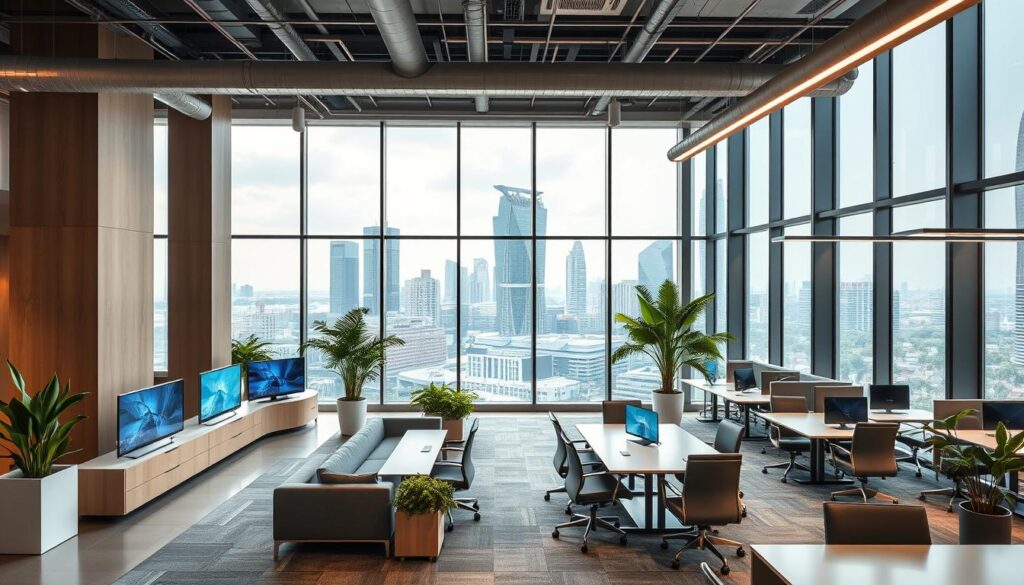
Smart office spaces offer many benefits for businesses. They improve operations, employee well-being, and help the environment. As more businesses adopt these spaces, they’re becoming a top choice for real estate investments.
Challenges in Adopting Smart Office Technologies
Smart office technologies bring many benefits, but their adoption in Singapore is tough. The high initial cost is a big problem, especially for small businesses. They need to plan their Commercial Financing carefully to fit the cost of new systems and updating old buildings.
Cybersecurity is another big worry. With more connections, smart offices are at risk. Property managers and tenants must take strong steps to keep data safe. They also need to update their systems often. Leasing Agreements might need to change to cover these new tech responsibilities.
Even with these challenges, smart offices offer great benefits. They can make work more efficient, save energy, and boost productivity. To overcome these obstacles, everyone involved needs to work together. This includes property owners, tech companies, and the government. They must find ways to make smart offices more accessible and encourage their use.
Major Players in Singapore’s Smart Office Space Market
Singapore’s smart office space market is booming. Real estate giants like CapitaLand, Keppel Land, and City Developments Limited are leading the way. They use the latest smart technologies in their buildings.
These technologies include advanced access control and visitor management systems. Tech giants like Canon provide secure printing solutions. This makes workspaces smarter and more efficient.
Real estate developers and tech firms work together to create intelligent workspaces. Commercial brokers are now highlighting these advanced properties. They aim to attract tenants and investors looking for top-notch Commercial Property and Real Estate Investments in Singapore.
Recent data shows a big increase in tech and ICT sectors in the CBD. They now occupy 14% of Grade A office space, up from 11% in 2018. Meanwhile, the financial services sector’s share has dropped from 45% to 31%.
The tech and ICT sectors are driving the demand for smart office spaces. Tech firms in Singapore have made up 40 to 50% of leasing deals from 2019 to 2022. The future office supply in Singapore is expected to be 31% below the 10-year average. This will make the competition for these advanced Commercial Property assets even fiercer.

The Role of Government in Promoting Smart Offices
The Singaporean government is key in growing smart office spaces. It supports this growth with policies and initiatives. These efforts shape the future of managing and financing commercial properties in Singapore.
Sustainability is a major focus. The government has set strict zoning rules and building codes. These rules push for energy-saving and eco-friendly smart office designs.
Programs like the BCA Green Mark certification encourage developers to use green tech. This has led to more sustainable commercial buildings. For example, over 3,200 projects have met the BCA Green Mark standards. They cover more than 94 million square meters of buildings in Singapore.
The government also offers financial help for businesses using smart office tech. The Startup SG program supports entrepreneurs in the commercial property sector. Plus, grants for flexible work arrangements encourage companies to use smart office spaces.
The government keeps updating zoning rules and property management to meet smart office needs. This teamwork between public and private sectors is crucial. It ensures Singapore stays ahead in the smart office movement.
Future Predictions for Smart Office Spaces
The future of smart office spaces in Singapore is looking bright. Experts predict strong growth in the coming years. The Asia Pacific Commercial Property market is set to grow at a 10.5% CAGR from 2024 to 2029.
Experts say this growth will be driven by smart office technologies. We can expect to see advanced AI, augmented reality, and biometric security soon. The introduction of 5G technology will also change the game, making data analysis and connectivity faster.
These changes will shape the Real Estate Investments and Office Buildings of the future. Businesses will focus more on productivity, sustainability, and security. This means a big demand for smart office solutions.
The future of smart office spaces in Singapore is both exciting and transformative. By using these new technologies, businesses can improve efficiency and create better work environments. This will benefit both employees and the company as a whole.
Case Studies of Successful Smart Office Implementations
Smart office technologies are not just for big companies worldwide. Local businesses in Singapore are also seeing the benefits. DBS Bank and Singtel are examples of how these systems work well in different fields, like Retail Spaces and Industrial Properties.
DBS Bank, a top bank in Singapore, has made its office smarter. It has automated lights, a central climate control, and easy meeting room booking. These features make work better and more comfortable for everyone. Singtel, a big telecom company, has also updated its office. It uses smart tech to help employees manage their work easily with digital tools.
These examples show how important Property Management is in keeping these smart offices running. They use smart building tech to save energy, make operations smoother, and tailor experiences for everyone. This makes the workspace better and more sustainable.
How Businesses Can Transition to Smart Office Spaces
Businesses in Singapore are focusing on smart office spaces to stay competitive. This move needs careful planning and execution. Working with Commercial Brokers helps find the right properties for each business.
Start by adding smart technologies like lighting and climate control. This method lets businesses add new solutions gradually. Leasing Agreements that allow for upgrades are very helpful during this time.
Training employees is key to using smart office technologies well. This way, businesses can get the most out of their new spaces. Also, Commercial Financing options can help cover the costs of these upgrades.
Adopting smart office spaces is a smart move for businesses in Singapore. With the help of commercial brokers, flexible leases, and special financing, companies can smoothly move to the future. This change boosts productivity, sustainability, and employee happiness.
Conclusion: The Future of Commercial Property in Singapore
The rise of smart office spaces is changing Singapore’s commercial property scene. These advanced workspaces boost productivity, sustainability, and employee happiness. They are key in shaping the business world.
The tech and e-commerce sectors are growing fast, increasing demand for office and industrial spaces. This growth is expected to continue. The retail and hospitality sectors have also bounced back after the pandemic, showing a strong consumer confidence.
Smart office technologies and government support for mixed-use developments will drive market growth. Prime office and retail rents are rising. Investors looking for high returns might find good chances in industrial lands and freehold properties.
