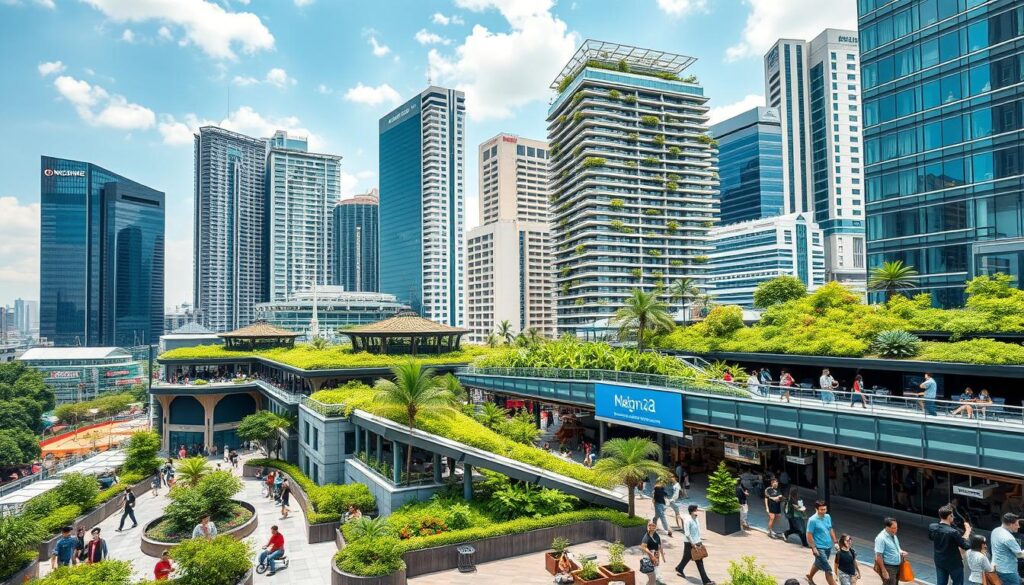
Singapore’s commercial real estate is set for exciting changes in 2024. The office sector is slowly getting back on track, with more deals happening. Retail spaces are also seeing a comeback, with fewer empty shops.
The industrial sector is proving strong, keeping rental and prices steady even when times are tough. People looking to invest are feeling hopeful, with a big jump in investment expected in the third quarter of 2024. Singapore is becoming a favorite spot for investors, along with Japan, South Korea, and Australia.
Key Takeaways
- The office sector is showing signs of recovery, with increased transactions and a rise in CBD Grade A office vacancy rates.
- The retail sector is experiencing a resurgence, with a 12.2% surge in food and alcohol sales, benefiting from increased tourism.
- The industrial sector remains resilient, with sustained rental and price growth, despite cooling demand due to higher interest rates.
- Investor sentiment is cautiously optimistic, with a forecast for a spike in real estate investment activity in Q3 2024.
- Singapore is emerging as a top market in Asia, attracting diverse investors with preferences for hospitality, co-living, and logistics sectors.
Introduction to Singapore’s Commercial Property Landscape
Singapore’s commercial property market in 2024 is showing cautious optimism. The office sector is recovering, with prime locations like Raffles Place and Marina Bay seeing a 5.1% rent increase. Retail spaces, especially on Orchard Road, are seeing more activity as tourism and online shopping grow.

The industrial sector is also doing well, with a demand for specialized facilities like cold chain warehouses. Industrial property prices went up by 0.6% in Q3 2023. The shophouse market saw a 5.6% increase in sales volume, but median rentals dropped slightly.
The market is looking positive, with hopes for more deals due to economic cycles and market forces. Knowing about trends in Office Buildings, Retail Spaces, and Industrial Properties is key to understanding Singapore’s commercial property scene.
Trend 1: Rise of Sustainable Building Practices
Sustainable building is becoming more popular in Singapore’s commercial property market. Green certifications and standards are now key for developers and investors. This shift is driven by environmental concerns and the chance for long-term cost savings.
Investors see the value in sustainable properties. They offer lower operational costs and higher tenant satisfaction. This makes them a smart choice for the future.
Buildings are a big source of global carbon emissions, with commercial buildings being a major contributor. The real estate sector is responsible for about 39% of global emissions. To tackle this, the government is supporting green building practices with initiatives and incentives.
Following energy efficiency standards can save money for owners and tenants. Green certifications like LEED and BREEAM show a commitment to sustainability. They also boost property value.
Biophilic design brings nature into buildings. It improves air quality, reduces stress, and boosts productivity. This is good for both tenants and employees.
Using circular economy principles in commercial real estate is also important. This includes reusing materials, recycling waste, and adopting circular business models. It helps reduce environmental impact, lowers costs, and creates value through innovative strategies.
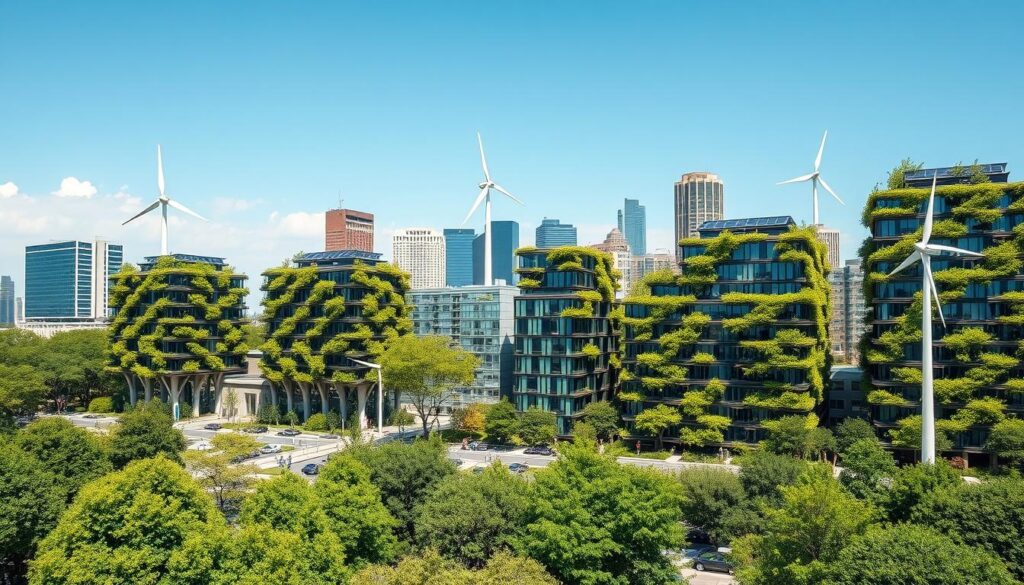
As demand for sustainable commercial properties grows, those who adopt these trends will have a competitive edge. They will be ready to take advantage of the opportunities in the Singapore market.
Trend 2: Remote Work’s Impact on Office Spaces
The rise of remote work has changed the office scene in Singapore. Companies now mix remote and on-site work, changing the demand for Office Buildings and Commercial Leasing. In 2023, CBD Grade A offices saw a 1.1 point rise in vacancy rates, showing a big shift in how we work.
Even with more remote work, the demand for Office Buildings in Singapore is still high due to limited supply. Companies are choosing to use existing spaces instead of expanding. This shift is making office designs more flexible and adaptable.
Remote work’s effect isn’t just in Singapore. Around the world, over 20% of workers could work remotely three to five days a week as well as from an office. But, more than half of workers can’t work remotely because of their jobs. Jobs in finance, insurance, management, and tech are more likely to be done remotely without losing productivity.
As companies adjust, landlords might need to change what they offer. They could turn Commercial Leasing spaces into coworking areas, data centers, or even homes. Tenants will look for offices that focus on health, wellness, and teamwork after the pandemic.
Trend 3: Technological Integration in Commercial Properties
The Singapore commercial property market is changing fast. Smart buildings and automation systems are now common. They make things more efficient and better for users. PropTech is key in managing and keeping properties in top shape.
Investing in new tech is essential for staying ahead. This includes things like Building Management Systems (BMS) and Internet of Things (IoT) devices. Commercial properties in Singapore are moving towards a tech-driven future.
Building analytics, powered by AI, help make buildings run better. Smart access and security systems, along with 5G, improve the user experience and safety. Although it costs a lot upfront, the benefits in Property Management and Investment Opportunities are worth it.
Trend 4: Demand for Flexible Leasing Options
The commercial property market in Singapore is seeing a big change. More businesses want flexible leasing options. This includes co-working spaces and shared offices, as work patterns evolve.
Landlords and property managers are now offering more flexible terms. They want to attract and keep tenants. This shift is big for the traditional leasing models.
Businesses need to quickly adapt to market changes. They also want to keep costs down in real estate. In 2023, there was a big increase in demand for flexible leasing.
Almost 88% of companies plan their space needs for just one year or less. This is a 151% jump from 2022. Flexible leasing options are becoming more popular.
52% of companies plan to add space, with some or all in new locations. This shows a trend towards decentralization. Flexible leasing agreements, like subscription-based models, are becoming more common. They meet the growing need for short-term, flexible arrangements.
Remote work and smart city development are also driving this trend. Businesses want properties that fit with smart city infrastructure. They look for amenities like fitness centers, communal areas, and rooftop gardens to attract and keep tenants.
Trend 5: E-Commerce Influence on Retail Spaces
The rise of e-commerce has changed the Retail Spaces scene in Singapore. More people are shopping online, making traditional stores focus on unique experiences. Despite a 2% drop in sales, the food and alcohol sector grew by 12.2%, showing a shift in what people want.
Places like Orchard Road are seeing a comeback, with rental prices expected to rise. Using technology is key to improve shopping experiences and compete with online stores. Retailers are using cool tech like augmented reality to make shopping fun and personal.
The demand for warehouses and logistics hubs is growing as e-commerce expands. Investors see big opportunities in these areas, especially in cities and transport hubs.
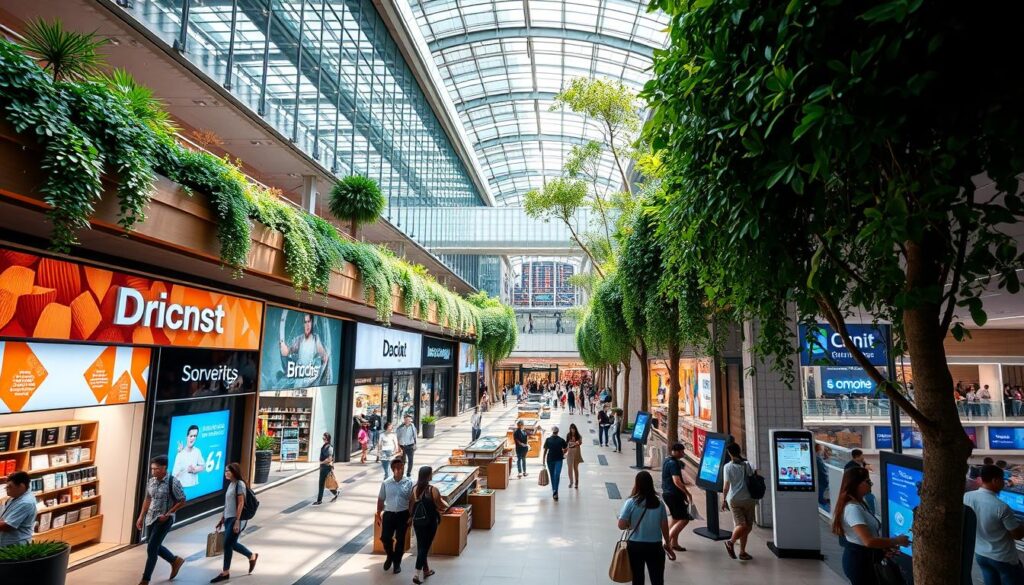
The Retail Spaces scene is always changing, and adapting is key for businesses and investors. By using new tech and creating unique shopping experiences, companies can thrive in the e-commerce era.
Challenges Facing the Commercial Property Market
Singapore’s commercial property market is facing many challenges. These include rising construction costs and insurance expenses. These factors affect Real Estate Investments and Property Valuation.
Regulatory changes and compliance, especially in ESG, are also big hurdles. Companies in this sector must adapt to these new rules.
The market is trying to balance new supply with demand. For example, prime office rents went up by 5.1% in 2023. Vacancy rates in prime office spaces dropped to 10%.
In retail, a 3-5% growth is expected due to tourism recovery. However, sales might drop by 2% because of e-commerce. Industrial warehouse rental rates rose by 2% for prime spaces. Yet, industrial property sales fell by 16.4% in Q3 2023.
These challenges highlight the need for strategic planning and adaptation. Investors and developers must navigate regulatory changes, economic conditions, and changing consumer preferences. This will help keep the commercial real estate sector thriving and sustainable.
The Role of Government Policies
The government in Singapore is key in shaping the Commercial Real Estate Market. They guide investment opportunities through various policies. These policies affect building practices, market stability, and the commercial property sector’s dynamics.
The government promotes sustainable development. They push for energy-efficient and green building standards. This change is good for the environment and makes eco-friendly properties more attractive to investors.
Market regulation is another area where the government steps in. They use the Additional Buyer’s Stamp Duty (ABSD) and the Total Debt Servicing Ratio (TDSR) framework. These measures help keep the market stable and prevent it from overheating. They also shape investment strategies and the overall Commercial Real Estate Market in Singapore.
The government also supports small and medium enterprises (SMEs). This support affects the demand for commercial spaces. Policies that help SMEs can lead to a need for flexible, affordable office and retail spaces. This shapes the commercial property landscape.
In summary, the government’s policies are vital for the Commercial Real Estate Market and investment opportunities in Singapore. They promote sustainable practices, regulate the market, and support businesses. This positions the commercial property sector for long-term growth and stability.
Future Outlook for Singapore’s Commercial Property
The future of Singapore’s Commercial Real Estate Market looks hopeful but cautious. Experts say different areas will grow at varying rates. Retail and industrial spaces are expected to be strong and possibly grow.
Recent studies show Core CBD (Grade A) rents might rise by 2% to 3% in 2024. The Industrial & Logistics sector will see new developments. This could change how people invest in these areas.
The retail sector is getting back on track, with 82% of people wanting more space. Yet, new retail spaces will drop by 15.1% in 2024. This mix of trends could bring both chances and hurdles for developers and investors.
As the market changes, players will need to keep up with trends like sustainability and tech. Being able to adapt will be key for the sector’s success and growth in Singapore.
Conclusion: Adapting to Future Trends
The commercial property market in Singapore is changing fast. It’s important for investors and developers to keep up with these changes. They need to know about market trends, new laws, and the latest technology.
There are many chances to make money in different areas. These include green, tech-savvy, and flexible office spaces.
Singapore’s commercial property market is strong and attractive for investors. The country’s economy is solid, even with challenges and new trends. The demand for office space, online shopping, and new tech are driving growth.
By focusing on green practices, using the latest tech, and offering flexible leases, businesses can thrive. They need to stay ahead of the game and meet the changing needs of companies. This way, they can find new investment opportunities in the commercial property world.
