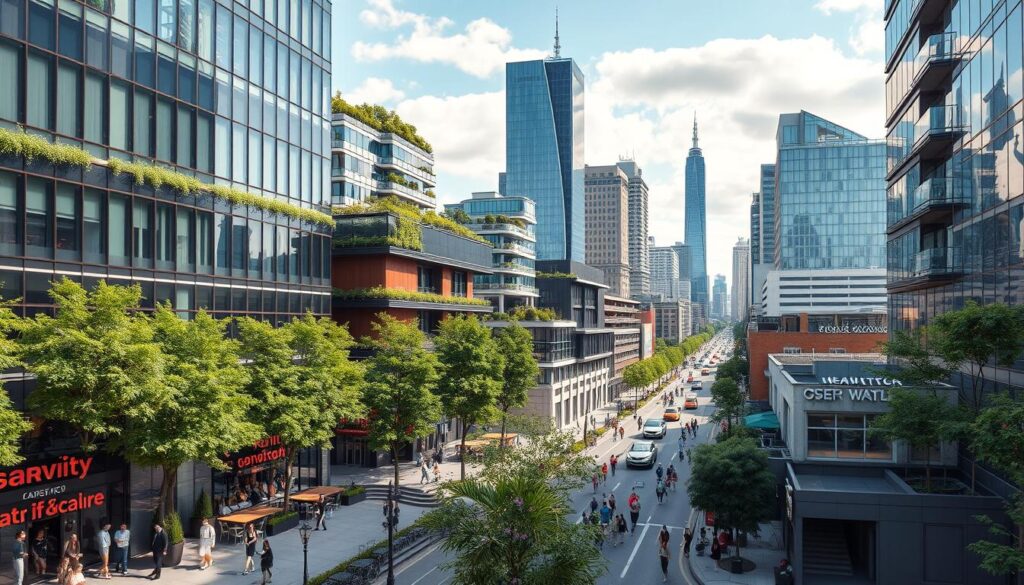
In the 1990s, Singapore started a plan to spread out office spaces. This move aimed to make cities better. Now, more office spaces are outside the city center, growing to 14.7 million square feet by 2023.
This growth means about 24% of all office spaces are in these areas. Places like Woodlands, Tampines, and Jurong East are becoming key business spots. Novena Fringe Centre and Paya Lebar Central are also turning into lively office areas.
Key Takeaways
- Decentralized office stock in Singapore has almost tripled, reaching 14.7 million square feet by 2023.
- Emerging commercial hubs outside the Central Business District (CBD) include Woodlands, Tampines, Jurong East, Novena Fringe Centre, and Paya Lebar Central.
- These decentralized office clusters offer cost-efficient and sustainable options for occupiers seeking large contiguous spaces.
- Rental gaps between the CBD and decentralized offices in Singapore range from 20% to 45%, narrower than in Hong Kong.
- The CBD is facing limited future supply, potentially leading to a severe supply crunch by 2030.
Overview of Singapore’s Commercial Landscape
Singapore’s commercial scene is changing, moving away from the old Central Business District (CBD). The CBD is still key, with top-notch office spaces. But new spots are popping up to spread out economic growth and offer different work settings.

These new areas are cheaper, with rent cuts of 20-45% compared to the CBD. This makes them attractive for businesses looking to save money.
The CBD’s office vacancy rates went up by 1.1 points in 2023. This means more high-quality office spaces are available in the city center. The retail sector saw a 2% drop in sales by October 2023. Yet, food and alcohol sales jumped by 12.2%.
Prime retail spots, like Orchard Road, might see rent hikes of 3-5% in 2024. This shows some Retail Spaces are still doing well.
The industrial property market has seen rent and price hikes since late 2020. This is due to a lack of quality assets, even with demand cooling in 2023. Next year, the sector might add 1.4 to 1.6 million square meters of new space. This could help slow down rent and price increases for Industrial Properties.
In summary, Singapore’s commercial scene is evolving. Decentralization, changing Retail Spaces, and a growing Industrial Properties sector are shaping the Investment Properties market.
Factors Driving Commercial Development
Singapore’s commercial scene is changing fast. This is thanks to economic growth, urban growth, and new tech. The government’s plan to create new business centers outside the CBD is a big help.
Leasing trends and how we manage properties are key in shaping these new hubs. The need for flexible workspaces and co-working areas has led to new commercial spots. Also, smart building tech and green infrastructure are making commercial properties better and more efficient.
Real estate growth in Singapore is influenced by many things. This includes business confidence, how much space is available, and financial numbers like return on investment. Investors looking for steady growth and good returns are also pushing these areas to grow.
Local economic conditions, jobs, and business activities are important for commercial real estate. We look at population growth, average income, and how much people spend to make sure these developments work well in the long run.
Noteworthy Emerging Districts
Singapore’s commercial scene is changing fast. New areas are catching the eye of businesses and investors. These spots offer different chances than the old Central Business District (CBD).
Paya Lebar is now a key spot for offices since the Paya Lebar Quarter opened in 2018. This project has made the area more appealing. It now has many Commercial Listings and Office Buildings for different types of businesses.
The Jurong Lake District is set to be Singapore’s biggest Commercial Listings and Office Buildings area outside the CBD. It will have over 1,700 homes and 146,000 square meters of office space. This makes it a great place for businesses looking to grow or move.
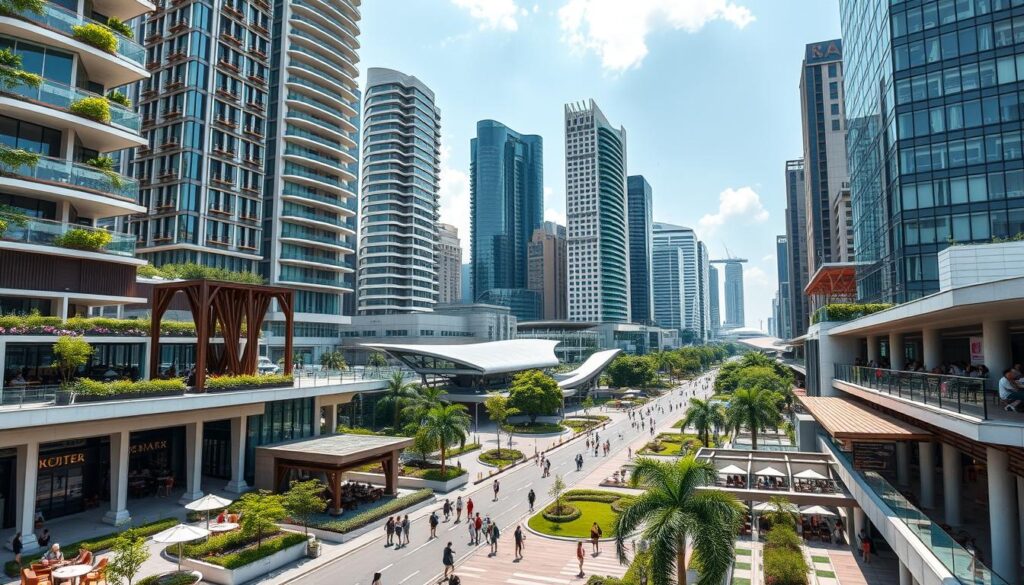
Woodlands is also growing, becoming a gateway to the north. It’s getting better infrastructure and connections. This makes it a good choice for businesses wanting to avoid the busy city center.
These new areas offer a wide range of choices for companies. They provide quality Commercial Listings, Office Buildings, and Investment Properties. They are great alternatives to the traditional CBD, meeting the needs of businesses in various fields.
Real Estate Trends in Commercial Properties
Singapore’s commercial real estate market is changing fast. The demand for flexible spaces and co-working areas is growing. This change is driven by the evolving workforce and the need for cost-effective solutions for businesses.
Developments like Paya Lebar Quarter show this shift. They offer a mix of office spaces, retail, and residential units. This meets the diverse needs of companies and employees.
The importance of live, work, and play elements in commercial property is growing. Landlords and developers are upgrading older industrial developments. This helps them stay competitive in the market.
The industrial property sector saw a 2.0% increase in rental rates for prime warehouse space in Q1 2024. There was also a slight decline in the industrial property price index.
Sustainable development in industrial properties is on the rise. This has led to a 50% increase in rental premiums for premium business parks. These parks focus on environmental and sustainability goals.
The commercial real estate sector in Singapore is set for growth. Deloitte’s 2025 survey shows 88% of global respondents expect their company’s revenues to increase. This positive outlook is due to expected growth and a focus on technology and data.
Infrastructure Improvements
Singapore is investing heavily in its commercial hubs’ infrastructure. These upgrades are key for the growth of decentralized business centers in the city-state.
New MRT lines, like the Jurong Region Line and Cross Island Line, are being developed. These will improve connections to business and education areas. The goal is for over 80% of trips to these districts to use public transport.
Singapore is also upgrading utilities and technology. High-speed internet and advanced telecoms are being prioritized. This will attract tech businesses and boost property values by up to 12%.
The government is committed to sustainable development. Eco-friendly features, like renewable energy and water systems, are being added to projects. These can attract a 5-7% premium from green-conscious tenants and buyers.
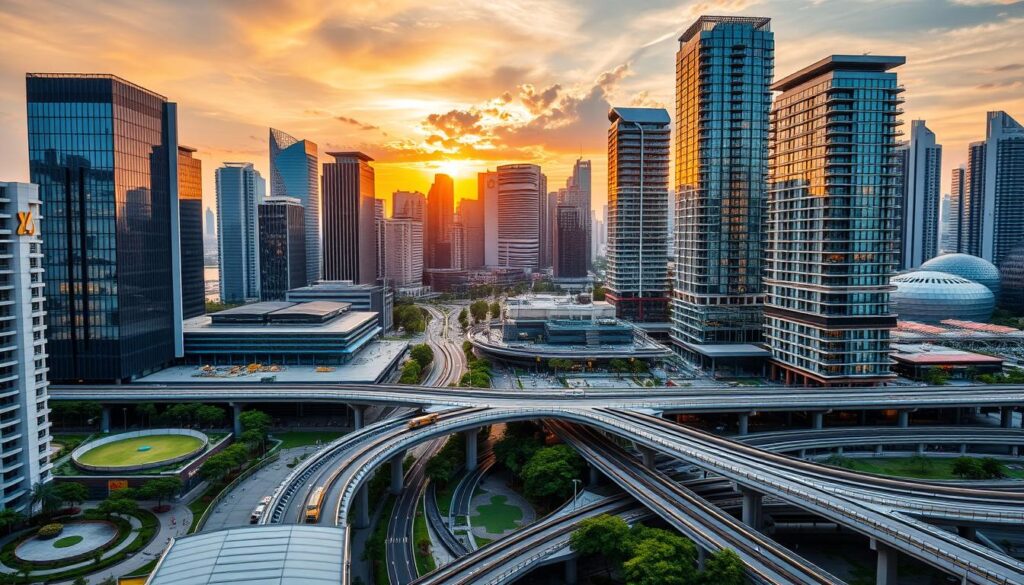
Singapore’s focus on infrastructure is setting the stage for its commercial sectors’ growth. These investments will improve connectivity, efficiency, and sustainability. This makes the city more appealing to businesses and investors.
Role of Technology in Commercial Spaces
The commercial real estate industry is changing fast, thanks to technology. In Singapore, the government is working on green infrastructure to save energy and improve living areas. Smart buildings with top-notch energy systems are becoming common, making offices and shops more efficient.
Looking for a place to rent online is now easier than ever. People can check out properties virtually, making it simpler to find the right spot. This change helps both tenants and property managers, giving them useful data to work with.
Research shows the PropTech market grew to USD $25,145.1 million in 2021. It’s expected to grow even more, at a rate of 15.8% from 2022 to 2030. This shows how important tech is becoming in the Commercial Real Estate world. Owners and managers are using it to improve their operations and offer better experiences for tenants.
As the commercial real estate world keeps changing, using technology wisely is key. By adopting new solutions, buildings can use less energy, make tenants happier, and make smarter choices with data. This will help shape the future of Singapore’s bustling commercial areas.
Investment Opportunities in Emerging Areas
Singapore’s new commercial areas are great for smart investors. Places like Jurong Lake District and Paya Lebar could give you big returns. They have lower costs and more demand. The government’s plans to grow these areas make them even more appealing.
But, investors need to think about the risks and benefits of these new markets. They should look at things like future supply, tenant needs, and growth chances. Real Estate Development here is promising, but it needs careful planning and research.
Recent data shows the Asia Pacific region had US$38.5 billion in deals in the third quarter of 2024. This is a 28% jump from last year. This rise in Commercial Listings shows more interest in properties outside of Singapore’s main business area. With Asia’s middle class growing, the need for good commercial spaces will likely increase.
Smart investors who spot and use these new chances can do well in Singapore’s real estate. By keeping up with market changes, they can find great Investment Properties. They can also lead successful Real Estate Development projects in Singapore’s busy commercial areas.
Case Studies of Successful Developments
The commercial property scene in Singapore is filled with success stories. The Paya Lebar Quarter (PLQ) is a prime example. It has over 900,000 square feet of Grade A office space, a mall, and homes. It quickly became almost fully occupied, with rent prices going up by about 20% since 2018.
This shows the high demand for top-notch commercial spaces in new areas.
JTC’s business parks, like those in one-north and Jurong Innovation District, are also thriving. These parks are hotspots for innovation. They bring together universities, research centers, and companies, encouraging teamwork and creativity.
By placing these parks in up-and-coming spots, they’ve drawn in a wide range of businesses. From small start-ups to big global companies, they’re making Singapore a center for innovation and business success.
These stories highlight the benefits of investing in commercial properties, especially in up-and-coming areas. Singapore’s strong infrastructure, good laws, and lively business scene make it a great place for investors. Both local and international investors see the potential in Singapore’s commercial property market.
Regulatory Landscape Affecting Development
The commercial real estate sector in Singapore is closely watched by policymakers. The government shapes the industry with policies and regulations. The Urban Redevelopment Authority (URA) plans key commercial hubs like the Jurong Lake District.
Zoning rules are changing to fit the needs of businesses in new areas. For example, the CBD Incentive Scheme promotes mixed-use developments. This could reduce office space in the central business district over time.
New property regulations will change how businesses plan financially. Properties not meeting these standards could lose value quickly. But, those that comply might see their value grow slowly.
There’s a growing push for greener practices in Commercial Real Estate. Owners must invest in upgrades and sustainability. Contractors in new areas face longer lease talks and stricter checks.
To deal with these changes, property owners should do audits and train their teams. Working with experts is key. This way, businesses can thrive in the new regulatory world.
Future Projections for Emerging Hubs
Singapore’s commercial scene is set to grow even more. By 2040 to 2050, the Jurong Lake District will see 100,000 new jobs and 20,000 new homes. It will become a key spot for green businesses and high-value sectors.
The West Region, including Jurong Lake District, is becoming a top choice for Commercial Property and Investment Properties. This is thanks to better infrastructure and a supply crunch in the Central Business District (CBD) by 2030. With the CBD’s limited new supply and old buildings being redeveloped, other areas like the West Region are gaining appeal.
These new hubs offer great chances for smart investors and developers. They see the potential for growth in these bustling commercial areas. As Singapore’s real estate scene keeps changing, the outlook is bright for those who tap into these trends.
Conclusion: The Evolving Landscape of Commercial Property
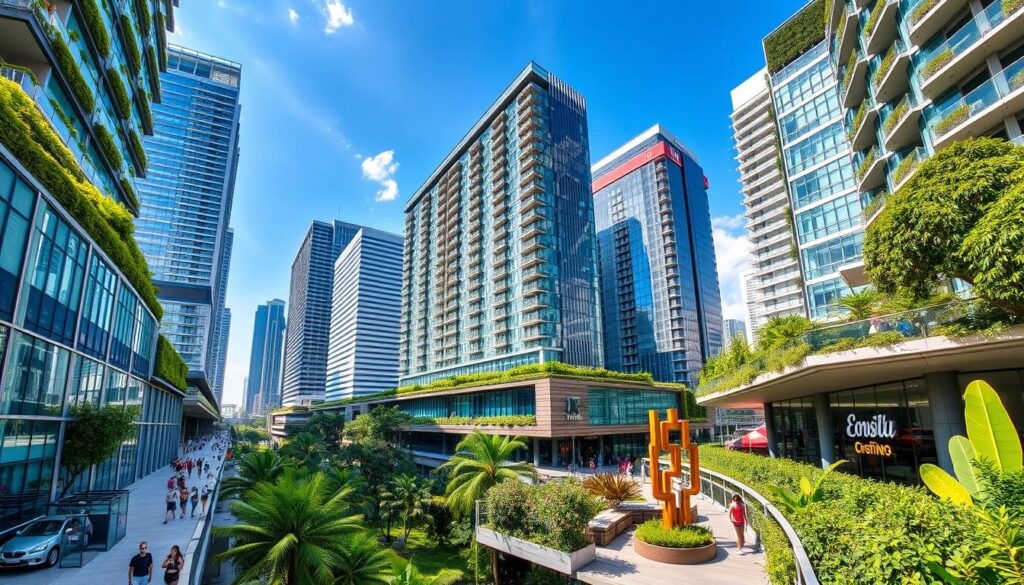
Singapore’s commercial property scene is always changing. It’s moving away from the old Central Business District (CBD) towards new areas. Places like Jurong Lake District, Paya Lebar, and Woodlands are becoming hotspots for businesses and investors.
These new hubs are growing thanks to better infrastructure, government support, and changes in the workforce. Investing in these areas, especially with new tech like IoT, AI, and blockchain, is key. Also, there’s a big push for green, energy-saving office buildings. These buildings are cheaper to run and more attractive to buyers.
As Singapore’s investment properties change, it’s vital for everyone to keep up. By watching the economy, demographics, and what people want, businesses and investors can find new chances. Singapore’s commercial property market is set to grow and get more exciting, making it a great place to invest.
