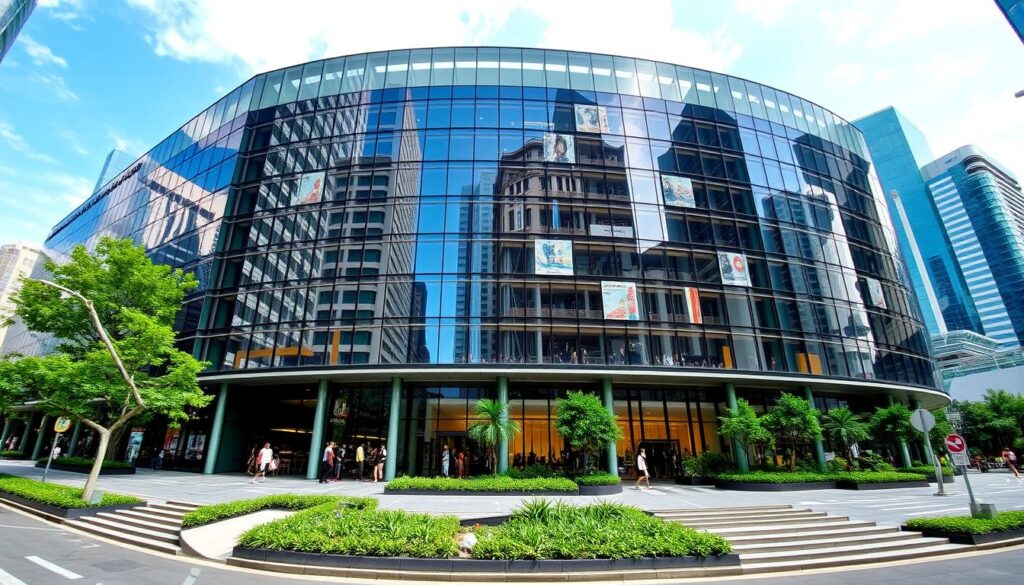
Investing in commercial real estate in Singapore is a great chance for businesses to grow. It offers many benefits, like higher loan-to-value ratios and flexible loan packages. Whether you’re a small or big business, knowing how to finance your property is crucial for growth.
Key Takeaways
- Commercial property loans in Singapore can provide up to 90% LTV financing, higher than typical residential mortgages.
- Loan tenures for commercial properties range from 25 to 30 years, shorter than the 30 to 35 years common for residential properties.
- Interest rates for commercial property loans are generally higher than residential loans, reflecting the perceived risk in liquidating commercial assets.
- Eligibility requirements include at least 30% ownership by Singaporean citizens or permanent residents and a minimum company incorporation period of 12 to 24 months.
- Total Debt Servicing Ratio (TDSR) does not apply to commercial property loans, as businesses are evaluated based on their own financial standing, not personal debts.
Understanding Commercial Property Financing
Commercial properties like Office Buildings, Retail Spaces, and Industrial Properties are key to Singapore’s economy. They grow in value over time and protect businesses from inflation. The location of these properties affects the loan terms, including the loan-to-value (LTV) ratios and interest rates.
In Singapore, you can find many types of commercial properties. There are retail spaces in malls and HDB shops, industrial facilities like factories, and office units. Even niche properties like medical suites and conservation shophouses have unique financing needs.

Businesses in Singapore have many financing options for commercial properties. Over 50 banks and financial institutions offer commercial property loans. These loans usually have an LTV ratio between 80% to 90% of the property’s value or purchase price.
The interesxt po?t rates for these loans are between 3.2% to 4.5% per year. Loans can last up to 20 to 30 years.
Types of Commercial Property Financing Options
In Singapore, you have many ways to finance your commercial property. Traditional bank loans offer good interest rates and flexible plans. These loans can last from 5 to 20 years, with LTV ratios between 65% and 80%.
For some projects, government grants can help with costs. These grants offer financial support and have favorable terms.
Private financing options are also available. They suit different risk levels and offer more flexibility. In some cases, loan-to-value ratios can go up to 100%.
Crowdfunding is a new way to fund real estate. It lets investors pool money for smaller properties or projects. This is great for those looking to finance smaller deals.
Some banks in Singapore have special financing packages. They combine a mortgage loan (up to 80% LTV) with a business term loan. This allows investors to finance up to 120% of the property’s value. These packages help investors make the most of their investment.

Choosing the right financing option is crucial. Make sure to look at the terms, interest rates, and fees. This ensures you pick the best option for your investment and development needs.
Preparing Your Financial Profile
When you’re looking for Commercial Financing for a commercial property in Singapore, lenders will check your financial profile closely. They look at your business’s history, how much money it makes, and its financial health. They also check your cash flow. Unlike home loans, there’s no Total Debt Servicing Ratio (TDSR) for commercial property loans.
To show a strong financial profile, you should have the latest 2 years of financial statements and 3 months of bank statements ready. This shows you can handle your Investment Portfolios well. A strong financial profile can lead to better loan terms and a higher chance of getting approved.
By carefully preparing your financial profile, you set your commercial property purchase up for success. Lenders will trust you to manage the financial side of your investment. This makes the Commercial Financing process smoother.
Assessing Your Financing Needs
When you plan to invest in commercial real estate or development projects in Singapore, you need to think about your financing needs. First, consider the property’s value or purchase price. This will help you figure out the loan-to-value (LTV) ratio. You should also think about legal fees, valuation fees, and stamp duty, which can be up to 3% for non-residential properties.
Don’t forget about renovation costs. Some loan packages can cover up to 100% of these expenses. Think about the property’s potential for growth and rental income. This will help you plan for the future and make sure your financing matches your long-term goals.

Industry data shows that commercial property prices in Singapore can be very high. For example, a corner retail unit in Ang Mo Kio costs almost $3.4 million. A shophouse in Neil Road can cost up to $12.5 million. Lenders often require businesses to be locally incorporated in Singapore for at least 12-24 months. They also need at least 30% ownership by a Singaporean citizen or PR.
The turnover rate needed to qualify for commercial loans is $20 million or below per year. This is according to some banks and lenders.
Choosing the Right Lender
Finding the right lender for your commercial real estate investment is key. You need to know the different lending options out there. A lender with experience in commercial real estate can guide you well.
Local lenders can be great, but those familiar with secondary markets offer unique chances too. They have loan programs for various assets or business plans. Look at interest rates, term lengths, and borrowing limits when picking a lender.
Service and how well a lender executes are important. Check their reputation, how easy they are to reach, and how fast they respond. Also, make sure they communicate clearly. By researching and planning, you can find a lender that fits your needs for Commercial Financing and Investment Portfolios.
Involving Professional Advisors
Getting help from experts can change the game when buying commercial property in Singapore. Real estate agents, financial advisors, and legal consultants offer crucial advice. They help you understand the market and make smart choices.
Real estate agents know the property market inside out. They share insights on value, trends, and where to invest. Financial advisors check how the investment affects your business’s finances. They make sure your Property Management and Investment Portfolios fit your financial goals.
Legal consultants are key for dealing with complex property laws in Singapore. They ensure your deal is legal and avoid problems. Don’t forget to talk to an SME loan consultant. They help manage risks and find the best loan rates for you.
With these advisors, you can make better choices, reduce risks, and boost your investment’s potential. Their knowledge is essential for a successful financing plan.

The Application Process
Applying for commercial property financing in Singapore needs careful planning. You must first gather all necessary documents. This includes your ACRA or MyInfo Business info, property details, and valuation or purchase price.
It’s important to avoid mistakes like submitting incomplete documents or unrealistic financial plans. The process involves an online application, a guarantor’s endorsement, and a review by a relationship manager. This can take several weeks, depending on your application’s complexity.
For Commercial Financing and Real Estate Investing in Singapore, being organized and accurate is crucial. With proper preparation, you can make the application process smoother. This increases your chances of getting the financing you need for your commercial property investment goals.
Understanding Loan Terms and Conditions
When you buy a commercial property in Singapore, knowing the loan terms is key. Fixed interest rates give you stability for 1-3 years. On the other hand, variable rates are tied to the Singapore Overnight Rate Average (SORA).
Commercial property loans last from 25 to 30 years. This is shorter than home loans. The lease left on a property can also shorten your loan time.
Prepayment penalties might hit you during the lock-in period, usually 2-3 years. These rules can greatly affect your long-term plans for Commercial Financing and Investment Portfolios. It’s vital to think about how the loan terms fit with your business’s financial plan and goals.
Dealing with commercial property financing can be tough. But knowing the loan terms is a big step. By keeping up with the details and matching the financing with your business goals, you can make better choices. This helps your Commercial Financing and Investment Portfolios thrive in the long run.
Legal Considerations in Commercial Property Financing
Financing a commercial property in Singapore comes with legal aspects to know. Doing thorough title searches is key to ensure clear ownership. For leasehold properties, the lease left impacts financing terms.
It’s also vital to follow local zoning laws and regulations. This helps avoid legal issues.
Goods and Services Tax (GST) is another factor. If buying from a GST-registered seller, the buyer must understand GST rules. Some investors form an investment company to own property. This can help with financing and legal protection.
The type of property, like retail, industrial, or hotel, has its own legal needs. Banks might have stricter rules for industrial B1 properties for individual buyers. Knowing these details is important in Singapore’s commercial property financing world.
Being aware of legal aspects in commercial property financing helps investors make better choices. It also helps avoid problems. Getting advice from real estate lawyers and financial advisors can make the process smoother and more successful.
Risks Associated with Commercial Property Financing
Understanding the risks of commercial property financing is key. Market changes can affect property values and rental income. This makes it vital for Real Estate Investing and Property Management experts to stay alert.
Economic downturns can make it hard to pay off loans. If tenants can’t pay on time, it’s a big problem. Also, keeping the property in good shape costs a lot. This can eat into your profits.
Changes in interest rates can also be a risk, especially with variable-rate loans. When rates go up or down, your payments might change. This requires careful money management. Also, short lease terms on leasehold properties can be a risk. You need to make sure they’re worth the investment for the long haul.
To manage these risks, Real Estate Investing and Property Management experts need to be proactive. They must understand the market well. This way, they can make smart choices and avoid big problems.
Strategies for Successful Financing
Financing your commercial property in Singapore requires a solid plan. Diversifying your investments can reduce risks. Commercial property leases are longer than residential ones. Lenders want at least 30% down for a loan, so a strong financial profile is key.
Managing cash flow well is crucial for loan payments. Knowing the property’s Net Operating Income (NOI) and capitalization rate helps understand its potential. The Cash on Cash formula also compares properties’ first-year performance.
Having a long-term financing plan is vital. Look into refinancing after the lock-in period for better rates. You can also use the property’s equity for more capital through equity loans.
Building good relationships with real estate “bird dogs” can lead to valuable leads. They might ask for a referral fee. Knowing the difference between debt and equity investments is important. Equity investors want higher returns than lenders. They can be individuals, families, private equity funds, or institutional investors.
Conclusion and Next Steps
Exploring commercial property financing in Singapore can be both rewarding and complex. Understanding the different financing options is key. A strong financial profile and professional advice can help unlock the potential of commercial real estate.
Success in commercial property financing comes from thorough market analysis and careful risk management. GDP growth, employment rates, and demographic trends are crucial. They can greatly affect the commercial real estate market, guiding your investment choices and property performance.
When planning your next steps in commercial property financing, stay informed and work with experts. Prioritize making informed decisions. With the right strategies and a well-planned approach, you can seize growth opportunities in Singapore’s commercial real estate market.
