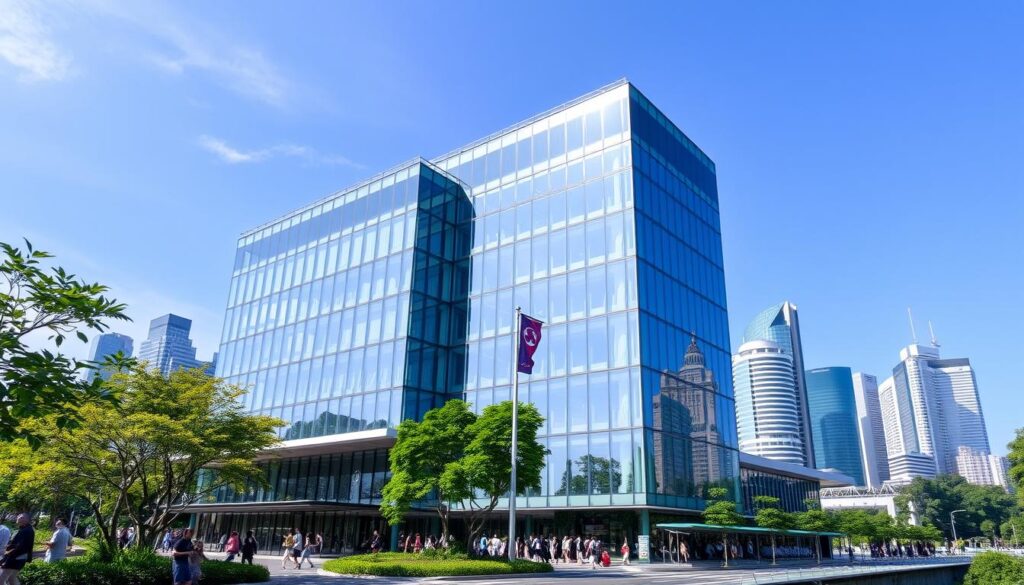
Singapore’s commercial property market has bounced back well after the pandemic. The Core CBD (Grade A) office rental market saw a 14.9% increase over 12 straight quarters since early 2021. But, lately, the growth has slowed down. Prime rents have stayed the same for two quarters, and office rental prices in the Central Region dropped by 0.5% in the last quarter.
This slowdown is linked to a rise in empty spaces. Vacancy rates jumped to 7.8% after the IOI Central Boulevard Towers project. This project added 1.2 million square feet of office space to the market.
Key Takeaways
- Singapore’s office rental market has shown resilience post-pandemic, with Core CBD (Grade A) office rents rising 14.9% over 12 consecutive quarters since Q1 2021.
- Recent data indicates a slowdown, with prime rents remaining flat for two consecutive quarters and a 0.5% quarter-on-quarter decline in the office rental index for the Central Region.
- The market faces challenges due to a vacancy spike of 7.8% following the completion of IOI Central Boulevard Towers, adding 1.2 million square feet of office space.
- Vacancy rates for CBD Grade A offices fell by 0.4 of a percentage point to reach 6.1% in Q1/2024, the lowest since Q4/2022.
- The Grade A rental forecast for 2024 is set at -2% to -3%, indicating a potential decline in rents.
Overview of Singapore’s Commercial Property Landscape
Singapore’s Commercial Real Estate market is changing fast. Core CBD (Grade A) rents hit S$11.95 per square foot in Q1 2024. This is the 12th straight quarter of growth. Vacancies in the core CBD are about 3.6%.

Workplace changes are leading to more relocations. This is especially true for firms in private wealth, insurance, and legal sectors. They often need smaller to mid-sized spaces.
The Retail Spaces sector is also seeing changes. Retail sales in Singapore dropped by 2% year-to-date as of October 2023. But, food and alcohol sales jumped by 12.2% in 2023. This is thanks to more tourists.
Orchard Road retail rents are expected to rise by 3 to 5% in 2024. This shows Singapore’s prime shopping spots are still strong.
In the Industrial Properties segment, rents and prices have gone up since late 2020. The industrial sector plans to add 1.4 to 1.6 million square meters of new space in 2024. This is more than the 800,000 square meters added in 2023.
The commercial property landscape in Singapore is influenced by inflation, sustainability, and tech. Businesses are finding ways to stay profitable despite higher costs. Developers and occupiers are focusing on green buildings and saving energy.
The data center industry is growing, and logistics are becoming more important. These trends are shaping the future of Singapore’s Commercial Real Estate market.
Current State of the Office Rental Market
Singapore’s office rental market is showing signs of stability. The vacancy rate for CBD Grade A offices dropped to 6.1% in Q1/2024. This is the lowest since Q4/2022, with declines in Grades AAA and A buildings.
Average monthly rents for CBD Grade A offices stayed at S$9.65 per square foot. This shows a slowdown in the rapid rent increases of past years.
Rents in City Hall and Marina Bay areas fell by 0.1% and 0.2% respectively. But, the Beach Road/Middle Road sub-market saw a 0.2% increase. This mixed performance highlights the complex dynamics in the Leasing and Commercial Listings sectors.
The office rental index for the Central Region fell by 0.5% quarter-on-quarter. Median rents for Category 1 offices dropped by 0.8% in the same period. This decline might be due to new supply, like IOI Central Boulevard Towers, which raised the vacancy rate to 7.8%.
The Property Management industry must watch these trends closely. It needs to adjust its strategies to deal with the changing office rental scene in Singapore.
Factors Influencing Rental Pricing
Rental prices for commercial properties in Singapore are influenced by many factors. The city-state’s economy is uncertain, affecting demand for office and industrial spaces. This, in turn, changes rental rates.
Industry surveys show that 84% of users look at competitive rates when deciding to move. The space’s quality and access to skilled workers are also important, for 62.5% and 51.6% of respondents, respectively. This means landlords must offer good prices and well-kept properties to keep tenants.
The manufacturing sector grew by 7.5% in Q3, showing industrial real estate’s growth. But, office space demand has dropped, influenced by remote work. This change affects the commercial property market.
Lease renewals are getting pricier due to limited supply and high interest rates. This is especially true for tech and banking, big users in Singapore. Knowing what drives rental prices is key for investors and tenants.
Impact of Remote Work on Demand
The pandemic has changed how we work, making remote work more common. This shift has affected the need for traditional office spaces. Employers are now looking into flexible work options, as new guidelines will show in December 2024.
Research shows that 32% of companies think they’ll use their offices more in the future. This is especially true for tech, media, and telecom sectors. But, overall, there’s a drop in demand for old-style office spaces.
Remote work has helped companies save money on office costs. This includes rent, utilities, and furniture. As a result, more office spaces are empty, showing a decrease in demand everywhere.
Remote work has also changed the commercial property market. Co-working spaces and shared offices are becoming more popular. They offer affordable options for remote workers and small businesses. This competition has led landlords to offer more flexible leases for office buildings and commercial properties.
Popular Office Locations in Singapore
Singapore’s Commercial Real Estate scene is full of great office spots. Each place has its own perks for businesses. The Central Business District (CBD) is a big deal, with Raffles Place, Shenton Way, and Marina Bay being top choices.
Raffles Place has the most Grade A office buildings in Singapore. These top spots cost between $10 to $20 per square foot. Anson Road is also popular, drawing companies in real estate, advertising, media, shipping, and trading.
Beach Road and Middle Road, with places like Bugis Junction Towers, are growing in value. The Jurong Lake District site shows promise for new Commercial Listings beyond the CBD.
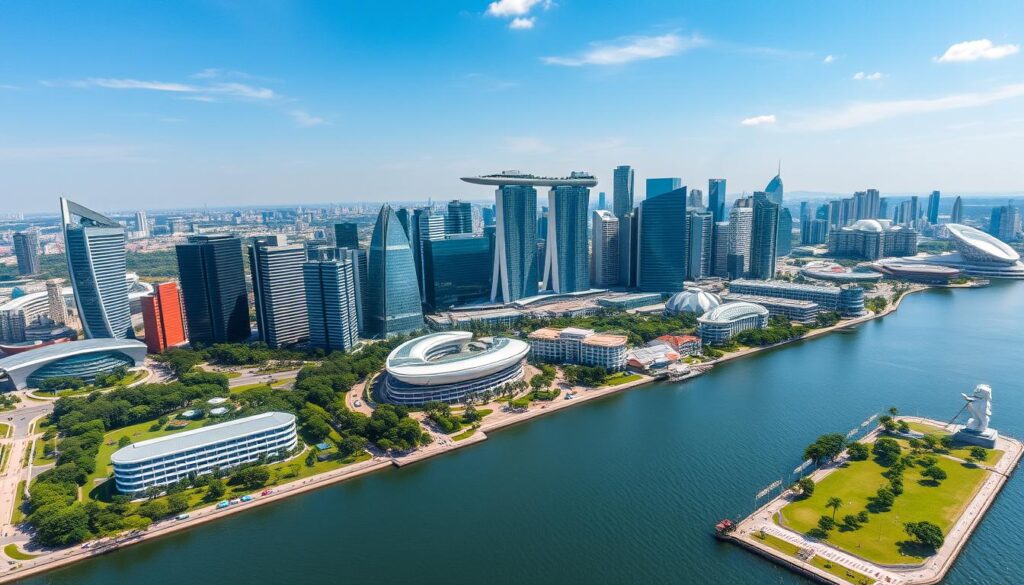
North Bridge Road is known for its co-working and office spaces. The River Valley area is becoming a business hub with quality offices. Shenton Way, near TanjongPagar MRT, offers offices with great views.
Singapore’s Office Buildings meet different business needs. From the CBD’s prestige to new areas, there’s something for every budget and need.
Sustainability in Office Spaces
In the world of Commercial Property and Office Buildings, sustainability is key. Businesses in Singapore look for office spaces that match their green goals. They want to reduce their environmental impact and enjoy the benefits of eco-friendly practices.
A CBRE survey found 57% of corporate real estate executives aim for net-zero emissions. Climate change is a top priority for C-suite executives, a Deloitte survey shows. So, more companies want Prime Office Buildings with green certifications.
Sustainable office spaces in Singapore are on the rise. More buildings are using eco-friendly practices and green design. This includes energy-saving lights, biophilic design, and waste management. These efforts help the environment and save companies money.
Government policies also push for sustainability in office spaces. In the United States, 13 places have Building Performance Standards for commercial buildings. Over 50 others have policies for benchmarking and transparency. As sustainability grows, the Office Buildings and Property Management sectors must adapt to stay competitive.
Technology’s Role in Office Rentals
The world of Commercial Real Estate is changing fast, thanks to technology. Property Management is using new solutions, changing the office rental market. Digital tools and smart building tech are making it easier for businesses to find and rent spaces.
Smart building tech is a big trend, making spaces more efficient and user-friendly. It includes systems for predicting maintenance and improving security. Also, apps help property managers talk better with tenants, making everyone happier.
Remote and hybrid work models are also changing things. Businesses want flexible spaces that meet their needs. Tech is helping by making it easier to find and manage these spaces.
Green tech and sustainability are also big in office real estate. Smart thermostats and energy systems help businesses save money and the planet. This shows how important eco-friendly practices are becoming.
Technology is key in the future of office rentals. It’s used for virtual tours, marketing, and making smart decisions. These tech advancements are meeting the changing needs of businesses and tenants.
Government Policies Affecting Commercial Property
Singapore’s commercial property scene is changing thanks to government policies. The CBD Incentive Scheme and Strategic Development Incentive (SDI) give extra space to property owners. This encourages them to update older commercial buildings.
These efforts aim to make the central business district better and use land wisely.
The COVID-19 pandemic has also changed workplace rules. The government has set guidelines for flexible work. This has changed how companies need office spaces, moving towards remote and hybrid work.
Landlords and investors in commercial property need to watch these policy changes. They must adjust their plans to keep up.
The government is also focusing on sustainability in commercial property. Even though no big policy changes have been announced, there are plans for stricter energy targets. This is part of Singapore’s effort to cut carbon emissions.
Developers and property owners will have to focus on energy efficiency and green buildings. This is to stay ahead in the market.
In summary, the commercial property market in Singapore is very connected to government policies. Investors and industry players need to stay informed and flexible. This way, they can navigate the changing rules and find new chances in Commercial Property, Investment Properties, and Leasing.
Predictions for the Future of Office Rentals
The commercial real estate market in Singapore is changing fast. The future of office rentals looks both tough and full of chances. In the short term, experts say rental rates will stay under pressure because of lots of office space. CBRE, a top global real estate firm, thinks rents will start growing again in the second half of 2025.
But the long-term view is brighter. Singapore’s great talent, top-notch infrastructure, and business-friendly environment draw in global companies. Especially in new areas like artificial intelligence (AI). For example, OpenAI plans to open new offices in Singapore, showing the city-state’s appeal for Commercial Real Estate and Investment Properties.
The growth of AI will likely lead to more demand for office space. Companies need to house their growing teams and tech needs. Also, more people working from home might change what offices look like. This could be good for landlords and developers to meet new tenant needs in the Office Buildings sector.
In summary, while there are short-term hurdles, the long-term outlook for Singapore’s Commercial Real Estate market is bright. With a focus on innovation, green practices, and flexibility, the office rental market is ready to adapt and thrive in the future.
The Role of Co-Working Spaces
Co-working spaces are key in Singapore’s commercial property scene. They offer flexible work environments that meet the needs of businesses of all sizes. Major players in the co-working sector are innovating to keep up with market demands.
The number of co-working spaces worldwide is set to hit 10,000 by the end of 2016. Around 735,000 members will use these shared offices. The co-working industry is expected to grow by 30% from 2015, showing its rising popularity.
Co-working spaces are more dense than traditional offices, sometimes twice as dense. Over ten years, the space per employee has dropped from 250 to 180 square feet. This shows a more efficient use of space. Landlords have invested in co-working spaces, improving facilities like restrooms and HVAC systems.
The growth of co-working spaces has boosted commercial real estate. Co-working operators are key in absorbing space in big cities. Landlords and investors are teaming up with co-working operators to tap into this trend. They’re also converting traditional buildings into co-working spaces.
Co-working spaces appeal to freelancers, startups, and small businesses looking for affordable offices. But, even big companies are interested. They see the value in networking and sharing ideas.
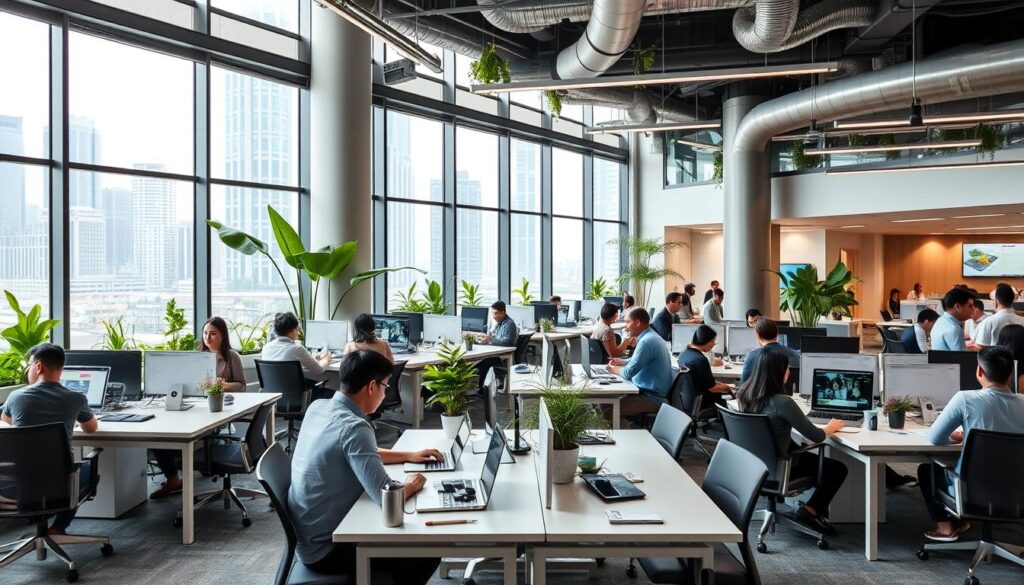
The rise of co-working spaces shows how work needs are changing. People want flexibility, networking, and a community feel. As remote work grows, so will the demand for flexible office spaces in Singapore.
Investment Opportunities in Commercial Property
The Singapore office rental market has seen ups and downs. In the first quarter of 2024, investment dropped by 95%. Yet, there are still chances for smart investors to make a profit.
Figuring out the return on investment (ROI) in office rentals is key. High borrowing costs and capex are big factors. But, there’s a chance for growth in prime areas, making it worth it for investors.
Foreign buyers in Singapore get the same rights as locals when buying Commercial Properties. This makes Singapore a great spot for international investors. With no income limits or special rules, it’s a chance for Commercial Brokers to make good deals.
Despite the hurdles, the Singapore office rental market has a bright future. Keeping up with trends, rules, and financing can help investors find good deals. This way, they can find properties that are both profitable and sustainable.
Conclusion and Final Thoughts
Singapore’s commercial property market has shown it can handle tough times. The COVID-19 pandemic and global economic changes didn’t stop it. The office rental market is adapting, with tech and e-commerce leading the way in demand for space.
As Singapore grows, it’s important for investors and tenants to keep up with trends. They should look into new chances in real estate.
Sustainability and hybrid work models are key for the future of offices in Singapore. Landlords and developers focusing on energy, flexibility, and employee happiness will attract more interest. The government’s efforts to help investors and businesses could open up new investment properties and growth spots in commercial real estate.
Staying ahead in the Singaporean commercial property market is crucial. By understanding the market, finding new solutions, and using government help, investors and tenants can find great opportunities ahead.
